
Genomic Scale
Part 03 · The Genomic Power Shift
Genomics is big business. A single genome can reveal clues about your health, ancestry, relatives and children. A genome is not a cute little file. It is a biological epic, a family document and a data-management headache beyond anything you’ve dealt with before. A database of a million genomes becomes something else: research infrastructure, national strategy, medical reference material and an immensely valuable commercial asset, for example for developing medicines or diagnostics.
Sequencing has moved from one scientist and one patient into biobanks, health systems, pharmaceutical partnerships and international data networks. These resources can diagnose rare disease, improve cancer treatment and reveal new drug targets.
They can also collect human genomes faster than the public can understand who will use them, who will profit, and whether the data can ever truly be taken back.
Because once your genome sits in one of these databases, you may never fully know who can see it, sell it or use it — and by the time you find out, there may be no way to take it back.
How did we get from one genome to millions?
The 1000 Genomes Project reconstructed genomes from 2,504 people across 26 populations in 2008-2015. That was enormous then. Today, UK Biobank has whole-genome data from around half a million participants; Genomics England sequenced more than 85,000 NHS patients and participants; and the US All of Us programme has passed 535,000 sequences linked to health records.
Sweden’s SweGen project added 1,000 Swedish genomes to its reference data. Every project improves what researchers can see—and raises questions about who is represented. The more useful genomic data becomes, the more valuable, sensitive and politically charged it becomes.
Is more always better?
Sometimes. Huge datasets reveal patterns in common diseases and can connect children with extremely rare variants to the only comparable cases in the world.
But most questions do not require every base pair from every person. Often researchers need to know whether a variant has been seen, how common it is and whether it was linked to disease. Better questions and smaller more targeted searches can be safer and cheaper than collecting everything forever.
Your genome is not only yours
Your genome is personal, but it is also family information. It contains clues about your parents, siblings, children and even your unborn children, and their future children. All of whom never consented to share their DNA with you.
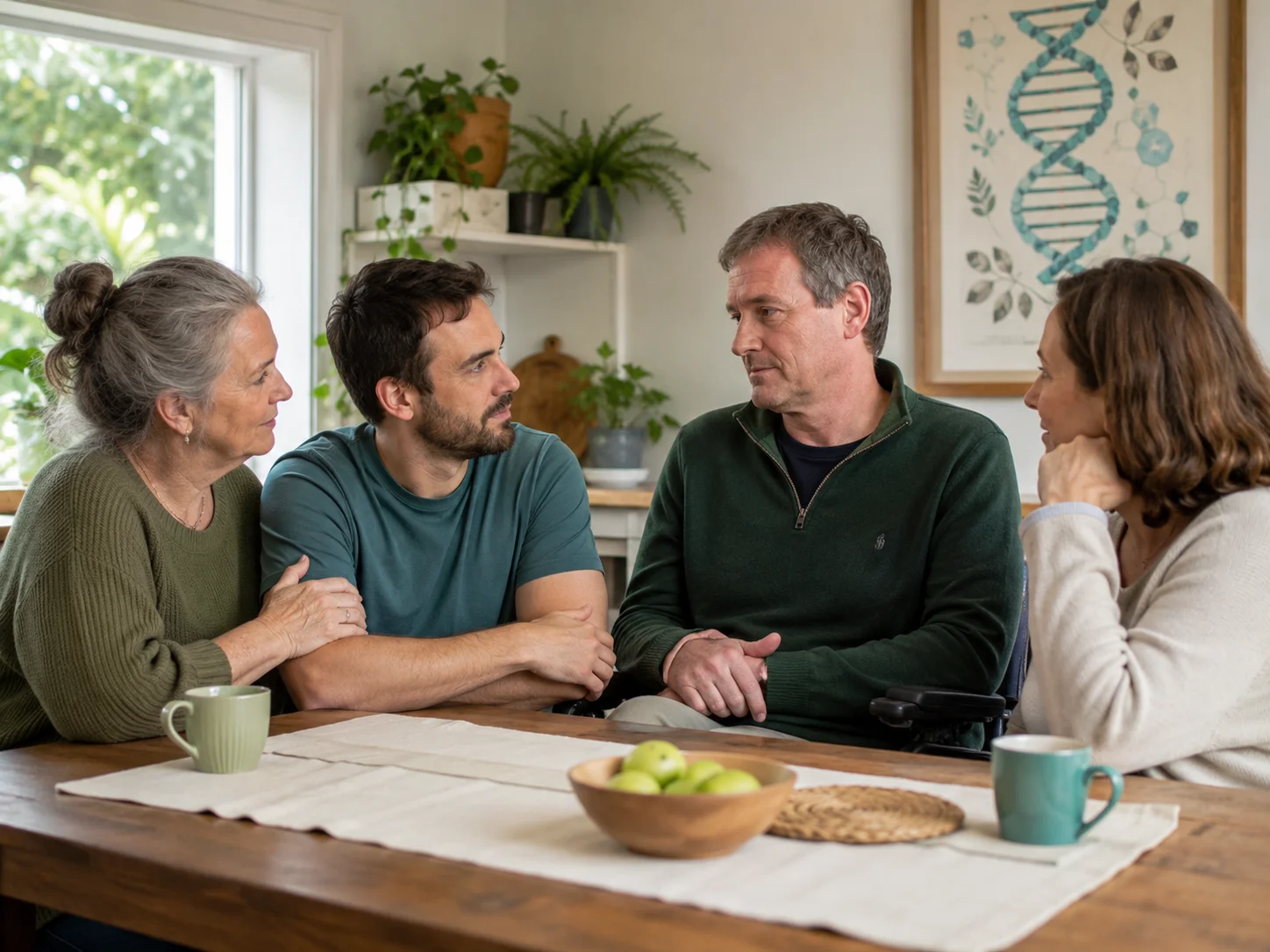
That makes ownership difficult. Is a genome medical data, a body part, family property, a national resource or a commercial asset? A consent form signed today may permit data to be copied, reanalysed, linked to future records or transferred when a company is sold.
Calling that ordinary consent is optimistic. It is closer to lending someone your diary, family tree, medical history, and a crystal ball—and hoping the small print anticipates the future.
When genomes become business
Genomic datasets attract pharmaceutical, biotech, diagnostics and AI companies because the same data can support drug discovery, risk prediction, clinical trials, model training and products for years.
Commercial research can produce valuable diagnostics and treatments. The problem is the imbalance: companies often understand the future value of the data far better than the person signing the consent form. People should not donate the raw biological material while everyone else sets the rules. Public benefit, personal consent and even family consent have to be part of the deal from the start and throughout. Ordinary consumer data often comes with clearer deletion rights. Genomic data can be much harder to retrieve, delete or track once copied, shared or reanalysed.
I would argue, given the massive power and knowledge imbalances between the people giving their DNA and tissues, and the organisations handling it, that most of current practices are extractive and exploitative. It is technically feasible to actively put people in charge of their genomes, and tissues, so that they retain the control over the years, and become active participants and beneficiaries. In the vast majority of cases I’ve seen, that is not what is being done. People sign a consent form, spit in a tube or give some blood or tissue, and have then forever effectively lost both control over that data, and a chance to benefit directly from it.
Global genomic inequality
Many genomic databases still overrepresent people with European ancestry while African populations, which carry the greatest human genetic diversity, remain underrepresented. The result can be missed diagnoses, misclassified variants and less accurate risk scores.
Projects such as H3Africa support African-led science and infrastructure. Several other countries have their own genome projects, and large biopharma are accumulating millions of genomes for drug target discovery. But the real answer is not simply extracting more genomes; it is capacity, sovereignty, partnership and benefit sharing.
Question Box
Would you join a national genome project?
Imagine your health service invites you to have your whole genome sequenced. They tell you it may help diagnose disease, improve future medicine and support research. They also tell you your data may be stored for decades, linked to your health records, accessed by approved researchers, and potentially used in future studies that do not yet exist.
Would you say yes? What would you need to trust before agreeing? Would it matter whether the project was run by a hospital, a university, a government, a charity, a pharmaceutical company or a startup with suspiciously cheerful branding? Would your answer change if your child had a rare disease, if you had cancer, or if the project offered to pay you?
This is not a theoretical question. Large-scale genomics depends on extraordinary people like you deciding whether to hand over your information, and millions have already done so.
Fact Box Preview: panel, exome or whole genome?
A gene panel examines selected genes linked to a clinical question. It is targeted and usually easier to interpret.
An exome examines the protein-coding 1–2% of DNA, where many understood disease-causing variants are found. A whole genome reads nearly all DNA, offering a broader view but also more uncertainty, storage cost and incidental findings.
More data does not automatically mean better medicine. Sometimes it means better answers; sometimes, more confusion.
Question Box
Who should control your genome after you die?
Imagine that you agree to have your genome sequenced for medical research. Years later, after your death, the data are still being stored, copied and analysed. It may help researchers understand cancer or rare disease, and it may reveal information that could protect your children and grandchildren.
But you can no longer withdraw consent, object to a new commercial partnership or decide that a future use crosses a line. Your genome has become a so-called “zombie genome”: not shuffling through the night asking for brains – which honestly might be easier to regulate – but continuing to live in databases after you are gone.
Should your original consent last forever? Should control pass to your family, even though the data may affect different relatives in different ways? Should researchers tell them about medically important findings, or would that violate the choice you made while alive?
Now choose: should a genome be deleted when its owner dies, protected under the original consent, inherited by the family, or treated as part of a scientific commons? And who should get the final say?
Continue the journey
Next, the book moves from genomic infrastructure into the clinic: what whole-genome knowledge can actually do for rare disease, cancer, pregnancy, prescribing and doctors managing uncertainty.
Further reading and source notes
- 1000 Genomes Project: final phase
- 1000 Genomes Project paper
- UK Biobank: half-million whole-genome release
- UK Biobank whole-genome sequencing paper
- Genomics England: 100,000 Genomes Project
- NIH All of Us integrated genomics and health database
- European 1+ Million Genomes initiative
- SweGen frequency resource
- SweGen paper
- H3Africa initiative
- Science for Africa: H3Africa capacity building
Your genome is not just a private code. At scale, it becomes medicine, money, infrastructure and power. Read the book before your genome becomes someone else’s cash cow.