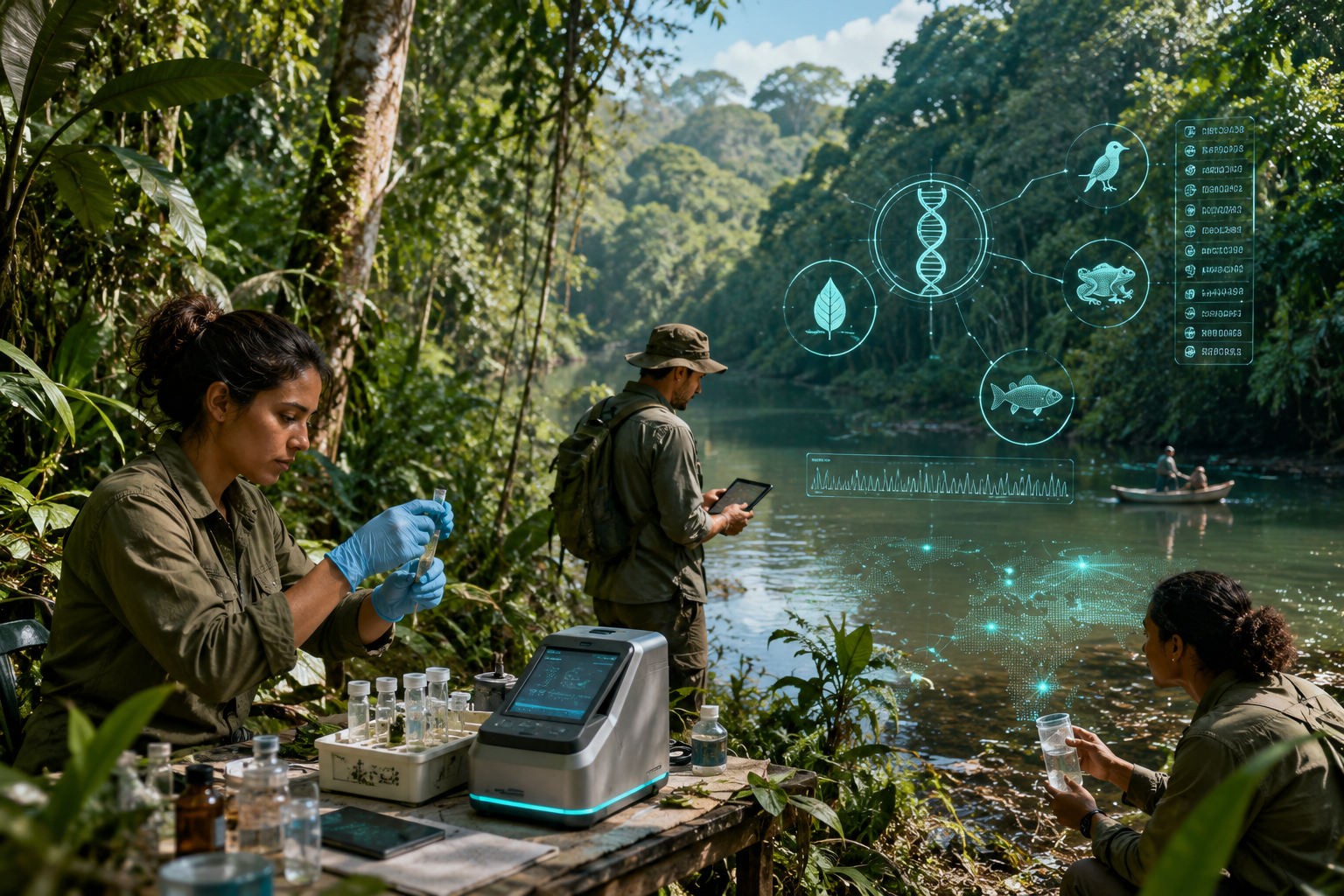
Genomics and Biodiversity
Part 06 · The Genomic Power Shift
The living world is disappearing while we are still trying to name it
Genomics is not only about humans. It is also about the rest of life on Earth, which is awkward, because the rest of life on Earth is not doing particularly well.
Around one million animal and plant species are estimated to be threatened with extinction, many within decades. In Europe, the European Reference Genome Atlas warns that about one fifth of roughly 200,000 European species are at risk of extinction, which is the sort of number that should make everyone put down their coffee for a moment.
The central problem is simple. We are losing species faster than we understand them. Genomics gives us new tools for reading life, but reading the label on a burning building is not the same as putting the fire out.
Because the same sequencing tools that could save a species from extinction can just as easily tell a poacher, a biopirate or a patent office exactly where to find it first.
This is only one part of the genomic power shift
The book follows genomics from human medicine into the wider biosphere: extinction, de-extinction, environmental DNA, illegal wildlife trade, invasive species, ecosystem collapse and the uncomfortable fact that humans are now powerful enough to redesign all life – while still being surprisingly bad at keeping hedgehogs alive.
A reference genome may be the precious start of understanding and preserving
A reference genome is like a high-quality instruction manual for a species. It does not tell us everything about that organism, but it gives scientists a deep map of its genetic structure, helping us understand adaptation, disease resistance, population history and vulnerability.
Projects such as the European Reference Genome Atlas and Biodiversity Genomics Europe are trying to change this. They aim to scale up DNA barcoding and reference genome generation so that conservation biology has better tools for identifying species, tracking biodiversity change and understanding how life responds to climate change, pollution, habitat loss and other pressure.
DNA can catch liars, smugglers and suspicious fish
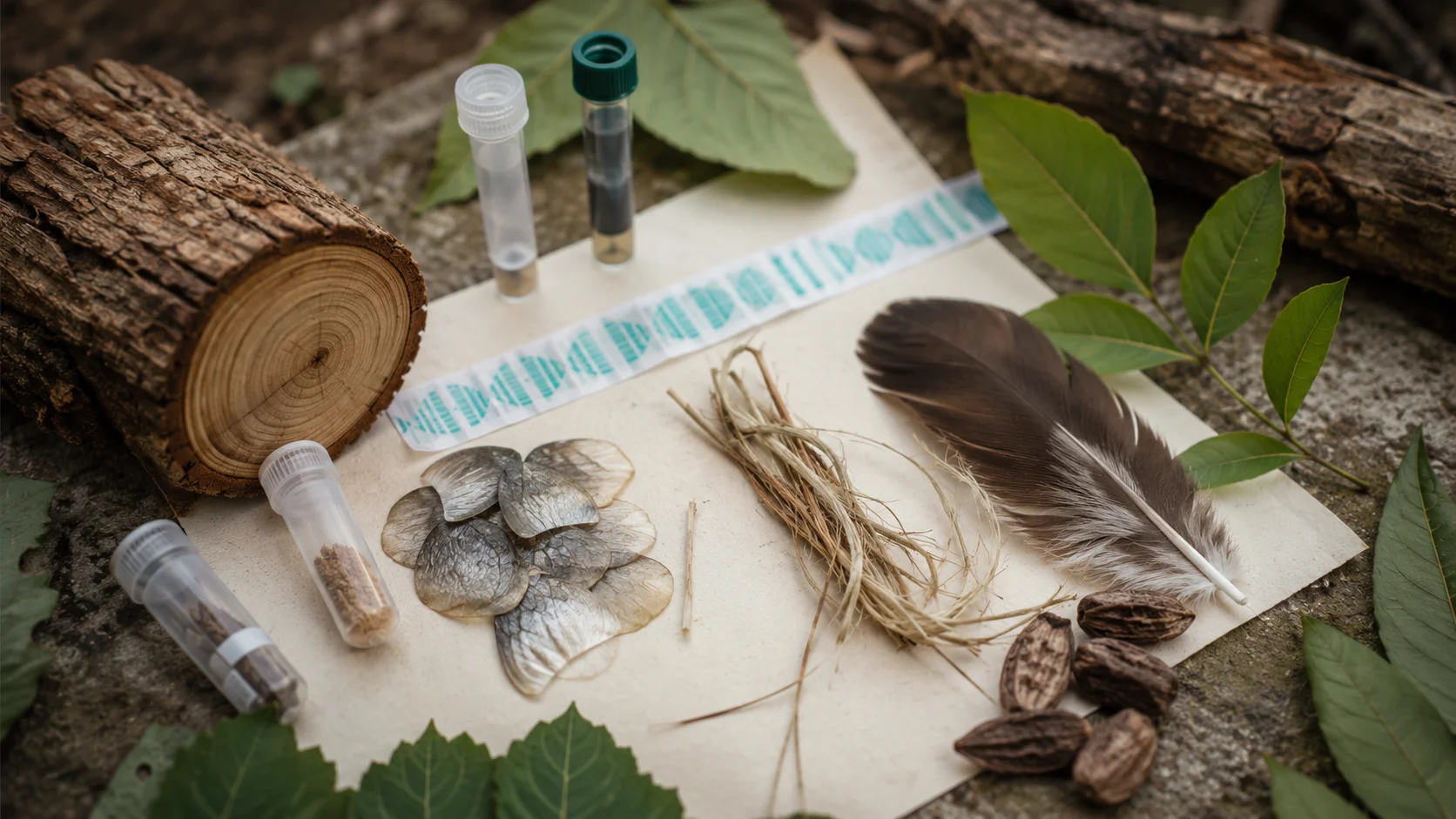
DNA can help identify illegal timber when a protected tree species is imported under a false name. It can reveal whether meat labelled as one animal is actually another. It can test whether the fish you bought is really cod, or whether someone thought your dinner, or the size of their wallet, would be improved by fraud.
At population level, DNA can go even further. Ivory can sometimes be traced back to the region where the elephant lived, helping investigators focus anti-poaching work. Fish genetics can help reveal whether catches came from places where that species should not have been taken. Plant DNA can help customs officers identify suspicious roots, powders, herbs and wood fragments that would otherwise look like the world’s least exciting bag of compost.
This is where species identification becomes nature’s most advanced game of “Guess Who?”—except everyone is wearing a mask, and many of them are endangered.
Environmental DNA: the crime scene is everywhere
You do not always need to see an organism to know it was there. Living things shed DNA into water, soil, mud, air, mucus, faeces, pollen, scales, slime and all the other charming substances that remind us nature has never cared so much about looking tidy as being wild.
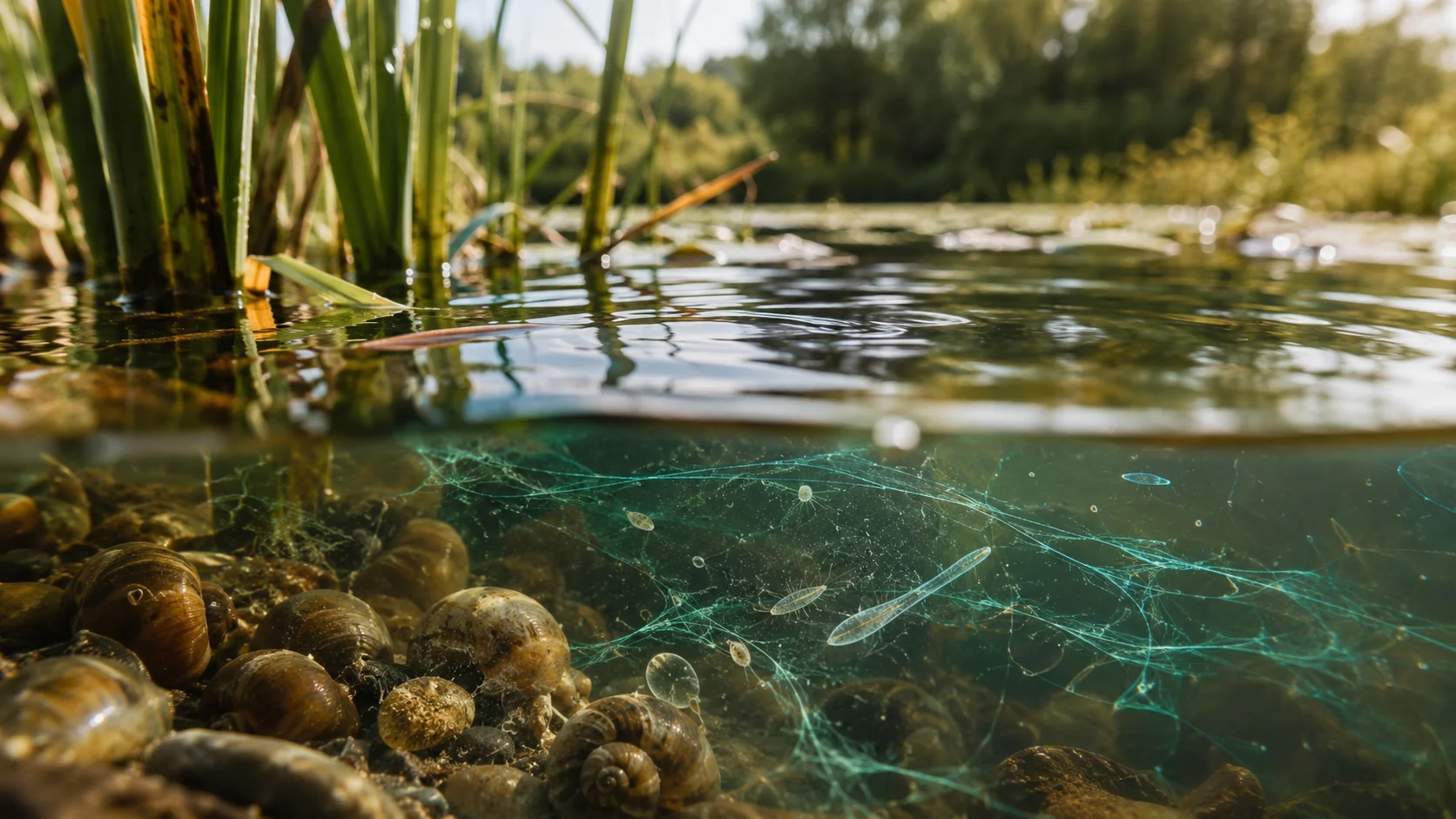
Environmental DNA, or eDNA, uses DNA collected from the environment to detect which organisms are or were present. Environmental DNA is slightly rude science, in the best way. Instead of politely waiting for an animal to appear, you test the water, soil, mud or air for the biological confetti it left behind. A water sample can reveal fish, amphibians, microbes, parasites or invasive species. Soil can carry traces of plants, fungi and bacteria. Air samples may contain DNA from nearby organisms, which is both fascinating and sometimes comes with a bag of surprises.
This can help conservationists monitor endangered species without disturbing them. It can also help detect invasive species early, track pollution effects, investigate wildlife crime and build a more detailed picture of ecosystems that would otherwise be difficult, expensive or impossible to survey.
Ecological disasters are not always over when the news stops
Biological disasters can be nastier because living things reproduce, spread, adapt and refuse to stay politely in the incident report. Invasive species, plant diseases, animal pathogens and ecosystem collapses can change a landscape for generations.
The manuscript uses examples such as potato blight in Ireland, chestnut blight in North America, rabbits in Australia and water hyacinth in African waterways to make a simple point. When biology gets loose, there may be no “undo” button.
That is why genomic monitoring matters. If DNA tools can detect an invasive species earlier, identify the source of an outbreak, track pathogen spread or show which populations are most vulnerable, they can become part of the warning system. The question is whether we build that system before the next ecological Pandora’s box opens.
“We cannot put it back in the box – once a genomically modified organism is in the wild, the change to the ecosystem may become irreversible, and evolve over time”
Cloning – what happened after Dolly?
Dolly the sheep was born in Scotland in 1996 and became the first mammal cloned from an adult cell. For a while, the world did what the world does best: shouted about Frankenstein, cloned babies and the end of nature. Then the headlines moved on. The science did not.
Since Dolly, cloning has not produced armies of copied humans – honestly, it wasn’t really a great idea in the first place!
Cloning has become quieter and more practical: cloned livestock, cloned pets, research animals, conservation cloning, stem-cell thinking and the wider idea that adult cells can be pushed backwards into possibility. The FDA concluded in 2008 that meat and milk from cow, pig and goat clones, and their offspring, are as safe as food from conventionally bred animals. Conservation scientists have cloned endangered black-footed ferrets from preserved tissue, and the U.S. Fish and Wildlife Service has reported cloned ferrets producing healthy offspring.
That pattern matters. First comes the thunderclap: a sheep, a headline, a moral panic. Then comes the quiet decade when the technology becomes normal enough to enter farms, clinics, conservation projects, companies and supply chains.
The real cloning problem may be less theatrical than Frankenstein and more… bananas? Much of the global banana trade depends on genetically near-identical Cavendish bananas, propagated clonally. That uniformity is convenient for farming and shipping, but terrible when the wrong pathogen arrives. Tropical Race 4, the fungus behind a new wave of Panama disease, attacks Cavendish bananas and has become a major threat to banana production; researchers have repeatedly pointed to the danger of genetic uniformity in global banana agriculture.
Cloning is not automatically bad. Sometimes it preserves valuable genetics. Sometimes it restores lost diversity. Sometimes it makes a beloved pet for someone with too much money and grief. But when cloning means millions of animals, crops or cell lines becoming genetically narrow, large sets of clonal organisms also introduce systemic risks.
Synthetic organisms in the wild
COVID-19 reminded the world that small biological systems can cause enormous disruption when they spread. Engineered bacteria, enzymes or synthetic organisms are not the same as viruses, but the broader lesson still matters: living systems can reproduce, evolve, move and interact with ecosystems in ways ordinary pollutants do not.
With AI-assisted protein design and synthetic biology, we are becoming better at designing enzymes and biological systems with properties far beyond what we could previously search for in nature. The ecological risks of releasing or accidentally leaking such systems are still poorly understood.
Question Box
If you could sequence anything, anywhere, right now, what would you test?
Would you test the mushroom you picked to check whether dinner is safe, or whether you have just collected a small white ticket to the emergency department? Would you test the fish in your shopping bag, the soil in a polluted field, the air in a hospital ward, or the water from a river where the fish have suddenly disappeared?
That is the promise and the weirdness of biodiversity genomics. Once you can read DNA from the living world around you, the planet becomes full of biological clues. Maybe the apple tree in your garden is a very rare heritage breed, and you just never knew?
Why this matters now
Biodiversity is not a decorative extra for people who own binoculars. It is the living infrastructure behind food, water, soil, climate regulation, disease control, materials, medicine and the ecosystems on which all humans depend.
As much as we like teenagers pretend to be independent, we are entirely depending on the biosphere to support us. Sadly – the opposite is not true – earths biosphere, and the biodiversity would probably do a lot better without us.
The danger is that we become brilliant at sequencing the living world just in time to write better obituaries for it. The opportunity is that we use the knowledge early enough to keep more of it alive.
Biodiversity and power
The final question is fairness. Many of the places richest in biodiversity are not empty wildernesses waiting for outside experts to discover them. They are homelands, food systems, sacred places and working landscapes, often cared for by Indigenous Peoples and local communities. Their lands cover at least 32% of the planet’s terrestrial realm and overlap with at least 36% of identified Key Biodiversity Areas. Conservation will fail if it treats the people already living with and defending biodiversity as peripheral.
If biodiversity genomics arrives as biological prospecting — taking samples, sequencing genomes, publishing papers and leaving little authority, money or infrastructure behind — it will be ineffective. International biodiversity policy already recognises rights, traditional territories and free, prior and informed consent. The same principle should apply when genetic resources become data, products, patents, medicines or crops through access and benefit-sharing and digital sequence information.
Conservation genomics will only deserve the word conservation if it also strengthens the people already keeping ecosystems alive: through consent, local leadership, benefit-sharing, Indigenous data governance, community capacity, long-term jobs and the right to say no. The CARE Principles put this well: data should serve collective benefit, authority to control, responsibility and ethics. If genomics treats local communities as obstacles or sample providers, we may fail both them and biodiversity. If it shifts power, resources and decision-making toward them, it can become part of a fairer way to keep life alive.
Continue the journey
Next, the book moves from the biosphere to society. Once DNA becomes useful in medicine, conservation, policing and industry, the questions become political very quickly: who owns genomic data, who can access it, who can steal it, who regulates it, and what happens when biology becomes part of law, surveillance and power?
Further reading and source notes
- IPBES Global Assessment summary for policymakers
- European Reference Genome Atlas
- Biodiversity Genomics Europe project overview
- Biodiversity Genomics Europe and DNA barcoding
- FDA: animal cloning safety
- U.S. Fish and Wildlife Service: cloned black-footed ferret offspring
- Environmental DNA in wildlife crime and conservation forensics
- Forensic potential of eDNA in freshwater wildlife investigations
Read the book before the future of life is decided by people who think biodiversity means having three kinds of oat milk.