
Genomics in Society — Best and Worst Scenarios
Part 07 · The Genomic Power Shift
When biology becomes data, society gets hugely impacted
A genome is not just a file. It is also a medical record, a family tree, a biological fingerprint, a risk profile, a research resource, a commercial asset and, in the wrong hands, a tool for discrimination or surveillance.
That is why genomics becomes political the moment it leaves the lab. A DNA test may begin as a medical question, an ancestry gift, a police investigation or a research donation, but the information does not stay neatly inside that box. It can be copied, stored, linked, hacked, sold, inherited, reanalysed and used in ways that were not obvious when someone first spat into a tube.
Because a DNA sample given for one reason rarely stays confined to that reason — it can outlive the consent it was given under, and reach relatives who never agreed to anything.
This is where the genomic power shift becomes social power
The book follows genomic data into privacy, policing, insurance, family life, law, discrimination, politics, public trust and the question nobody can avoid: what happens when biology becomes searchable?
Can someone steal your DNA data?
In 2023, 23andMe confirmed a data breach affecting about 6.9 million users through its DNA Relatives feature. The incident showed something important about genetic data: even if only some accounts are directly compromised, connected family-matching features can expose information about many more people.
That is the whole problem in miniature. Genomic data are not like a stolen password, where you change it, mutter some cusses and move on. You cannot reset your genome. You also cannot reset the fact that your genome says things about your relatives, including relatives who never tested and never agreed to be made easier to find.
Genomic data are huge, and huge things leak
A single human genome sequence can take up around 200 gigabytes of data, depending on how it is stored and processed. NHGRI has estimated that worldwide genome-sequence data storage needs could reach around 40 exabytes by 2025, which is not a number normal humans are emotionally or intellectually equipped to process.
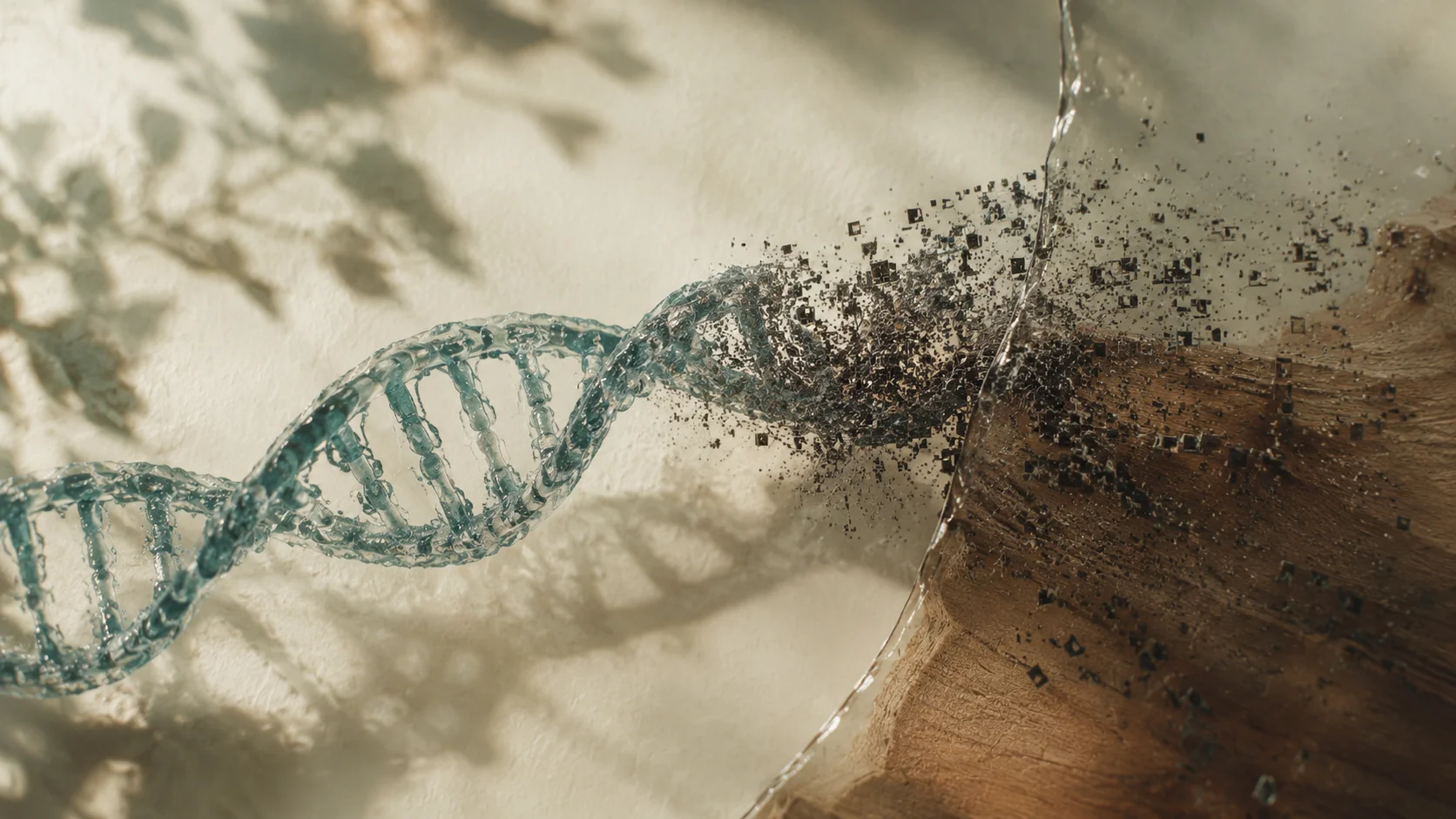
If a hospital sequences your genome, how long should it store the data? Who can access it? Can you ask for it to be deleted? What happens if the hospital changes software vendor, joins a research network, collaborates with a pharmaceutical company or gets hit by a cyberattack?
These are not “future ethics seminar” questions. They are practical infrastructure problems, and the infrastructure is being built while the public is still deciding whether a DNA test would make a fun birthday present. The author Magdalena Zarowiecki still remembers vividly the Wannacry ransomeware attack on the UK National Healthcare System in 2017, when thousands of hospital computers were hacked, and the frantic days in the aftermath, trying to get machines functioning, and restore data.
The law is trying, but biology is awkward
The law has noticed that genetic information is sensitive. In the United States, the Genetic Information Nondiscrimination Act of 2008 protects people from genetic discrimination in health insurance and employment. In Europe, GDPR treats genetic data as a special category of personal data, meaning it receives extra protection and usually cannot be processed unless specific legal conditions are met.
Laws have boundaries, exceptions and geographical limits. GINA, for example, does not cover every possible use of genetic information, and data protection law can only help if organisations understand it, obey it, enforce it and do not accidentally build a leaky spreadsheet with the confidence of a drunk raccoon.
The deeper problem is that genomic information does not behave like normal personal data. It is partly about you, partly about your relatives, partly about populations, and partly about future medical interpretations that may not exist yet. A dataset collected today can become more revealing tomorrow because the science improves.
Can someone own a gene?
One of the strangest legal questions in modern biology is whether anyone can own a piece of the code of life. This sounds ridiculous, because your genes already exist in trillions of copies inside your body and, frankly, it would be awkward to receive a licensing invoice from a biotech company every time your cells divided. Yet for years, companies did patent genes, including BRCA1 and BRCA2, which are linked to increased risk of breast and ovarian cancer.
In 2013, the U.S. Supreme Court ruled in Association for Molecular Pathology v. Myriad Genetics that naturally occurring DNA cannot be patented simply because it has been isolated, while complementary DNA, or cDNA, can be patentable because it is not naturally occurring. That ruling matters because gene patents can affect testing, access, prices and research freedom. When biology becomes commercially useful, the argument is never only scientific. It becomes legal, political and financial very quickly.
And now, how about patenting a gene you invented? An enzyme 100 or 1,000 times more powerful than existing in any real organism? Using big protein databases and AI, that is exactly the kind of thing you can engineer.
From policing to molecular surveillance
It can also stretch into uncomfortable territory. Forensic genetic genealogy uses DNA from crime scenes to search for relatives in genealogy databases and build family trees that may lead investigators to a suspect. The Golden State Killer case made this approach famous after investigators used genetic genealogy to identify Joseph James DeAngelo in 2018.
But the social question does not disappear just because the first famous case involved a monster. If your cousin uploads DNA to a database, should that make you easier for police to find? Should everyone in a genetic family network become searchable because one person tested? Should rules be different for murder, terrorism, sexual assault, immigration, missing persons or protest policing?
This is why genomics in society is not a simple battle between good science and paranoid privacy people. It is about deciding what powers we want institutions to have before those powers become normal.
Question Box
Would you live in a searchable genome society?
Imagine a future where hospitals, police, insurers, employers, governments and companies cannot see everything in your genome, but can query parts of it under approved conditions. A doctor might find a preventable disease early. Police might solve more violent crimes. Researchers might discover new treatments. Insurers might want to price risk more accurately. Employers might claim they only want to protect workers from hazardous exposures. Governments might say population genomics improves public health.
Where do you draw the line? Who gets access, who approves the search, who audits misuse, and what punishment is serious enough when the data cannot be made private again?
Who dunne it?
Accountability becomes slippery when biology, genomics and AI fail at scale. If an AI system for variant interpretation gets 2% of results wrong, who is responsible out of the fifty people who trained, tested and trusted it? The future has already sent warning shots. Williams v. Quest/Athena asked whether a genetic testing lab could be liable for alleged variant misclassification. Monash IVF settled, without admitting liability, after allegations that inaccurate embryo genetic testing led to potentially viable embryos being discarded. Medical AI systems such as IBM Watson for Oncology and the Epic Sepsis Model show how errors can be distributed through software, hospitals, workflows and trust. In the living world, cases such as StarLink corn and LibertyLink rice show how modified biology can escape its intended channel and become a legal, economic and ecological problem. A synthetic gene released into nature could be harder still. Once living systems reproduce, spread and evolve, the main goal — restoration — may be impossible. The secondary goal — holding someone accountable — may become almost as difficult. In this way, genomics and biological materials are unlike almost anything else. It is a mixture of evasive, vulnerable, plastic and endlessly remodellable — yet with a life of its own.
Why this matters now
That is exactly why the debate is hard. Most dangerous infrastructures are not built entirely out of villainy; they are built out of convenience, hope, emergency, money, optimism and a thousand small decisions nobody thought would become the architecture of society.
Some uses of genomic data will save lives and bring justice. Others may expose families, enable discrimination, deepen inequality, intensify surveillance or create markets where human biology becomes another extractive industry.
The question is not whether genomics belongs in society. It is already there. The question is whether society understands genomics well enough to protect people before biology becomes searchable by default.
Continue the journey
Next, the book looks forward to the future of genomics: AI, biosecurity, biological defence, biotech entrepreneurship, engineered pathogens, designer cells and the industries that may be built not only from software, but from living systems.
Further reading and source notes
- Reuters: 23andMe breach affecting 6.9 million users
- NHGRI: genomic data science
- EEOC: genetic information discrimination
- NHGRI: genetic discrimination and GINA
- European Commission: genetic data as sensitive personal data
- Forensic genealogy and the Golden State Killer case
- U.S. Supreme Court: Association for Molecular Pathology v. Myriad Genetics
Your genome is not just private data. It is family data, medical data, future data and social power.
Read the book before your biology becomes searchable, sellable or quietly normal.