This is a time for hope. Use it properly.
If you are a patient in a place where genomic medicine is available, you may have access to possibilities that no previous generation of patients had. Sequencing the human genome, and the work that followed, has moved parts of medicine from broad categories and best guesses toward cause, mechanism, diagnosis and targeted treatment.
That does not mean every test gives an answer, every result is useful, or every diagnosis comes with a cure. It means the direction of travel has changed. More cancers can be profiled. More rare diseases can be named. More inherited risks can be understood. More patients can find specialists, trials, registries, patient groups and treatment options that simply did not exist before.
Because a genomic result can change your treatment, your family’s risk and your privacy long before anyone sits down to explain what it actually means.
I have seen what this means
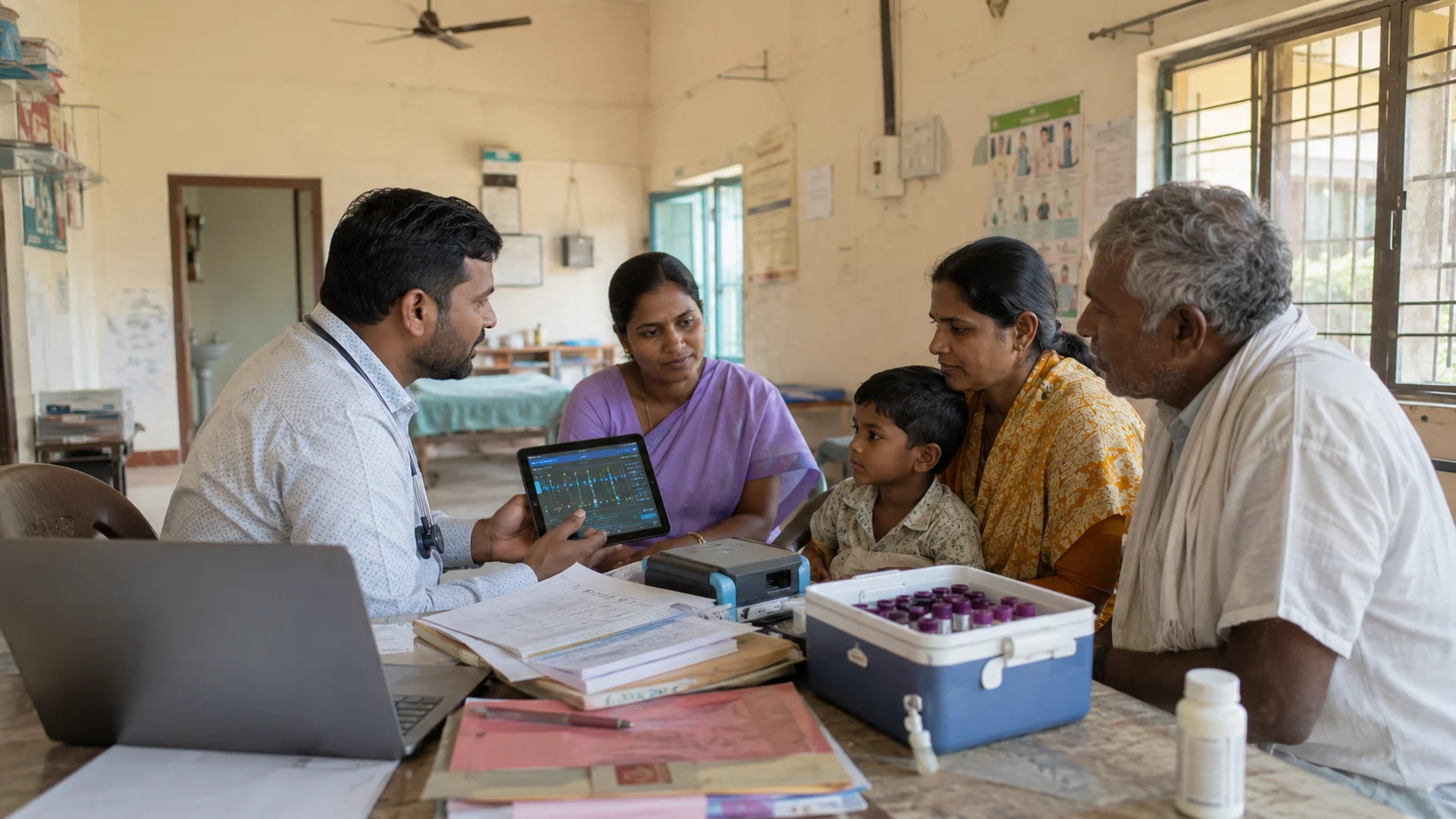
I have written genomic pipelines used to help diagnose more than 30,000 patients with cancer and rare disease, many of them critically ill. I have sat in molecular tumour boards with pathologists, clinical geneticists and other specialists while patient results were reviewed variant by variant, report by report, treatment option by treatment option.
When the team finds something actionable, the discussion changes. A mutation may point to a drug, a diagnosis may explain years of symptoms, or a report may change the next clinical decision.
A diagnosis can be a big deal
A diagnosis is not the same as a cure. Patients and families know that better than anyone. Still, a correct genetic diagnosis can end years of uncertainty, stop the wrong investigations, connect you to the right specialists, explain recurrence risk, identify relatives who may need testing, and help you find people with the same condition.
For rare disease, that can change daily life even before there is a treatment. For cancer, genomic profiling can sometimes show why a tumour is behaving in a particular way, which drugs are worth considering, and which drugs are unlikely to help. For inherited conditions, it can turn a confusing family pattern into something that can be managed.
Be active. Use serious sources.
Ask what your genomic test found. Ask whether the result is certain, uncertain or still being interpreted. Ask whether there are specialists for your condition. Ask whether a registry, patient group, trial or newer treatment exists. Ask what this means for relatives, future children, insurance, privacy and long-term care.
Do your research in the useful sense: national health services, hospitals, medical research centres, patient charities, specialist clinics, registries, peer-reviewed papers if you can read them, and proper clinical guidance. Do not build medical decisions around influencers, miracle-cure sellers, private wellness tests, or confident people online with no responsibility for what happens to you.
Trust specialists. Ask better questions.
Most of the time, the right move is to trust properly qualified medical professionals, especially specialists who work with your disease area every week. They know the clinical context, the limits of the test, the treatment pathway, and the risks that are invisible from a search result.
Being informed is still useful. Bring clear questions. Bring family history. Bring previous results. Ask what is known and what is uncertain. Ask what would change the plan. Ask whether there is someone more specialised who should review the case.
Find the patient groups
Patients are finding each other faster than ever. That matters. A good patient group can help you understand the language of your condition, find specialists, learn about trials, compare experiences, spot nonsense, and push researchers or companies to pay attention to the things patients actually need.
If you have a rare disease, an unusual cancer, an inherited condition, or a result that nobody has explained clearly, do not try to solve everything alone. Look for the serious groups: charities, registries, hospital-linked networks, research communities, and patient organisations with proper governance.
Clinical trials are trials
Clinical trials are essential. They are how treatments become real. Taking part can help you, your family, and future patients with the same condition.
Before joining, make sure people are honest with you. What is already known? What is still being tested? What are the chances of benefit? What are the risks and side effects? What happens to your tissue, DNA and health data? Could joining affect other treatment options? Who is funding the study? What happens when the trial ends?
Sharing DNA or tissue can help other patients
If your genome, tumour, cells or tissue are medically unusual, a reputable team may ask whether you are willing to share samples or data. Done properly, this can help other people with the same condition. It can help researchers understand the disease, find patterns, build tests, design trials and develop treatments.
You do not owe anyone your DNA. If you choose to take part, use proper routes: hospitals, recognised research institutions, registries, ethics-approved studies, or patient organisations. Ask who will access the data, whether companies may use it, whether results will come back to you, how privacy is protected, and how patients are represented.
If possible, do this with a patient group rather than as one isolated patient. Groups have more leverage than individuals.
Remember the business side
Genomic medicine is also a market. Drug companies, diagnostics companies, private clinics, hospitals, researchers, insurers, investors and healthcare systems all have incentives. Some of those incentives help patients. Some create pressure, delay, inflated claims, or fights about price.
Sometimes companies collect patient data to understand a disease and develop treatment. Sometimes they also need to estimate how many patients exist, how large the market is, and what price a healthcare system might pay. Patients can end up stuck between scientific possibility and commercial negotiation.
This is why informed patient groups matter. Access, price, evidence, trial design, data use and long-term follow-up should not be decided with patients outside the room.
Questions to take to your next appointment
- What exactly did my genomic test find?
- Is the result confirmed, uncertain or still being interpreted?
- Does this change my diagnosis or treatment?
- Could this result matter for my relatives?
- Is there a patient group, registry or charity for this condition?
- Are there approved treatments, trials or research studies?
- What are the realistic chances of benefit?
- What are the risks and side effects?
- Who can access my DNA, tissue or health data?
- Could this affect insurance, family planning or relatives?
- What should I read before the next appointment?
Read the book. Share it.
The Genomic Power Shift is written for people who need to understand genomics without becoming scientists. Patients, families, carers and patient groups are part of that audience. Read it if you want to understand why genomic medicine is changing healthcare, where the real hope is, where the limits are, and why patients need to be informed, organised and heard.
Share it with family, patient groups, clinicians, students, carers, advocates and anyone trying to understand what is arriving in medicine.