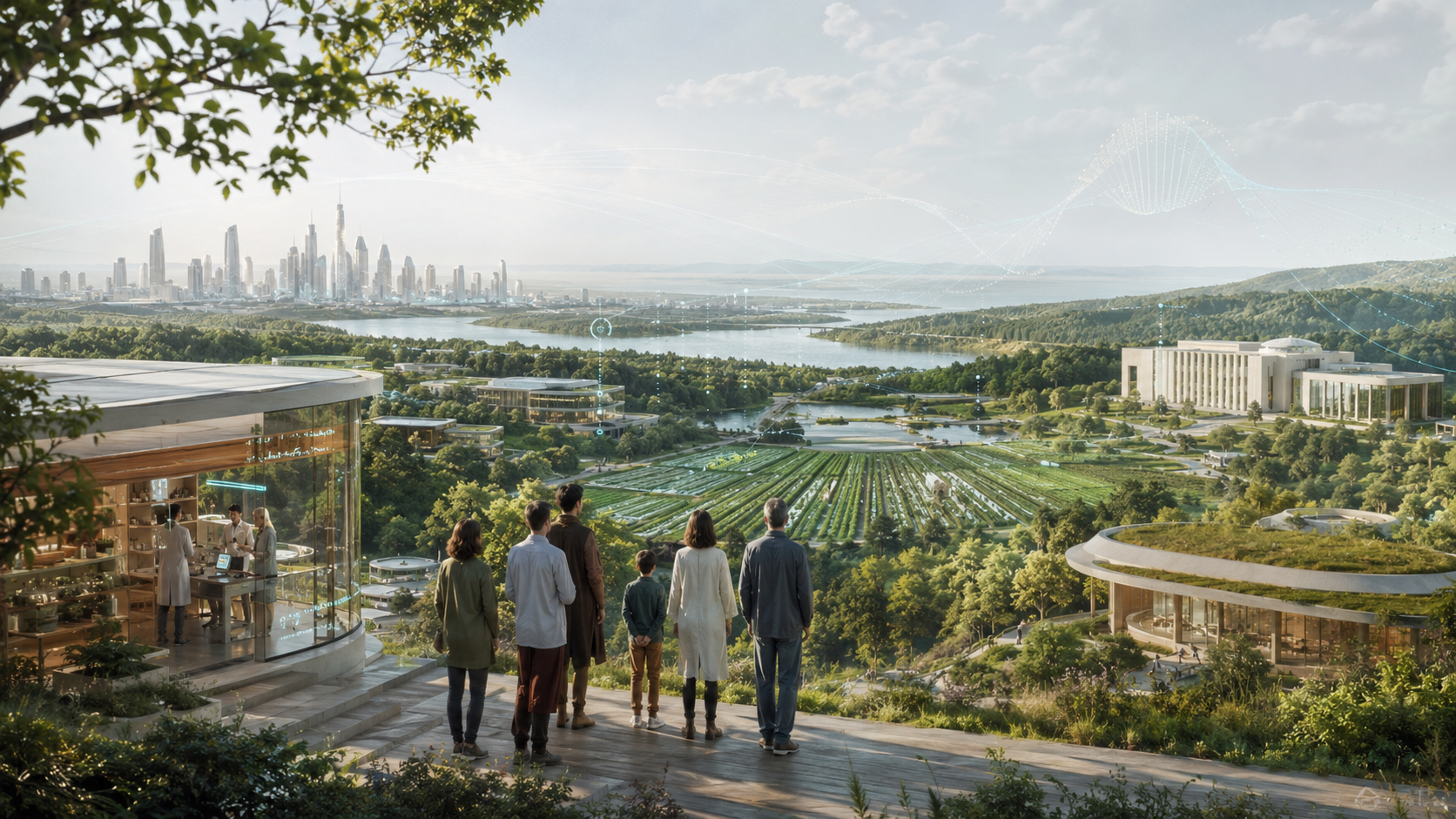
Closing — A World of Possibilities With Genomics
Part 09 · The Genomic Power Shift
The genomic revolution is not waiting for permission
By the end of the book, the point should be impossible to miss. Genomics is no longer a specialised corner of biology where experts quietly compare sequences and everyone else gets on with their daily lives undisturbed.
We can now read life at scale, edit it with increasing precision and scale, and use AI to interpret biological data faster than humans could manage alone. That means DNA is becoming medical infrastructure, family information, industrial material, forensic evidence, national strategy, commercial property and a tool for reshaping the biosphere.
This is the genomic power shift. It is not coming politely in the future with a calendar invite and a helpful explainer video. It is already here, badly explained, unevenly governed and moving much faster than public understanding, and our ability to really manage the longterm consequences of our decisions, for humanity and life on planet Earth.
Because by the time most people notice this shift, the decisions that mattered — what got approved, funded, patented, released or normalised — will usually already have been made without them.
This is why the book exists
The book is a guide to help you navigate the coming genomic era. The biological revolution already changing medicine, food, ancestry, crime, reproduction, biodiversity, biosecurity and the future of life on Earth.
We are not ready, but we are not powerless
The better reaction is informed urgency. Some genomic technologies will save lives, reduce suffering, diagnose children earlier, make cancer treatment more precise, protect ecosystems, track outbreaks and help us understand the living world with astonishing depth.
Other uses may intensify inequality, commercialise reproduction, turn family biology into extortion, expand surveillance, make medicine unaffordable, destabilise ecosystems or create new biological risks that we do not yet know how to govern. The point is not to love genomics or fear genomics. The point is to understand it well enough to decide what should be built, what should be regulated, what should be refused, and what should never leave the lab. The future of humanity and all life on the planet depends on our collective vigilance, restraint and, in my opinion, a fair bit of luck.
That is why public understanding matters. Not because everyone needs to become a geneticist, but because this is a future which belongs to all of, not a selected few. AI and large language models were unleashed on the public before we knew the consequences, and it is still like one massive experiment to see what we’ll do with it; who will be helped, and who will suffer serious consequences. We did the same with mobile phones, where side effect nobody had anticipated, like children with shorter attention span, and people operating their faces to look like Instagram filters. Genomics is exceptional with respect to these breakthroughs, in that modifying the human genome, or the biosphere will affect all coming generations and all life on Earth.
The book’s argument in one place
Life is becoming readable. Editable. Buildable. At scale. That sentence sounds simple, but it contains the biggest change in the book.
Readable means we can sequence DNA from humans, tumours, embryos, pathogens, extinct relatives, endangered species, soil, water and air. Editable means we can alter genes, cells, crops, microbes and potentially future generations.
Buildable means cells and DNA are becoming materials for medicine, food, industry, conservation, computation and design. Once that happens, biology stops being only the background condition of human life and becomes part of the toolkit of human power.
That toolkit can be used beautifully or stupidly. It can heal, exploit, protect, surveil, cure, exclude, restore or destroy, depending on who controls it and what rules we build around it.
What happens next is not automatic
That is why the conversation has to widen. We need scientists who can explain without hiding behind jargon, regulators who understand the technology before approving it, companies that do not treat consent as decorative theatre, and publics who know enough to ask difficult questions.
This is the moment to pay attention. Not later, when the data are already stored, the patents are already filed, the embryo tests are already marketed, the ecosystems are already altered, and the rules are already written by the people who arrived first, or invested the boldest.
Final Question Box
What kind of genomic era do you want to live in?
Do you want genomics to diagnose children faster, treat inherited disease, improve cancer care, restore damaged ecosystems and help us understand life more deeply? Most people would say yes to that future, at least in principle.
Which are your biggest worries, and what do you think we should do about them?
Continue exploring
Read the book before the future of life is designed without you in the room.