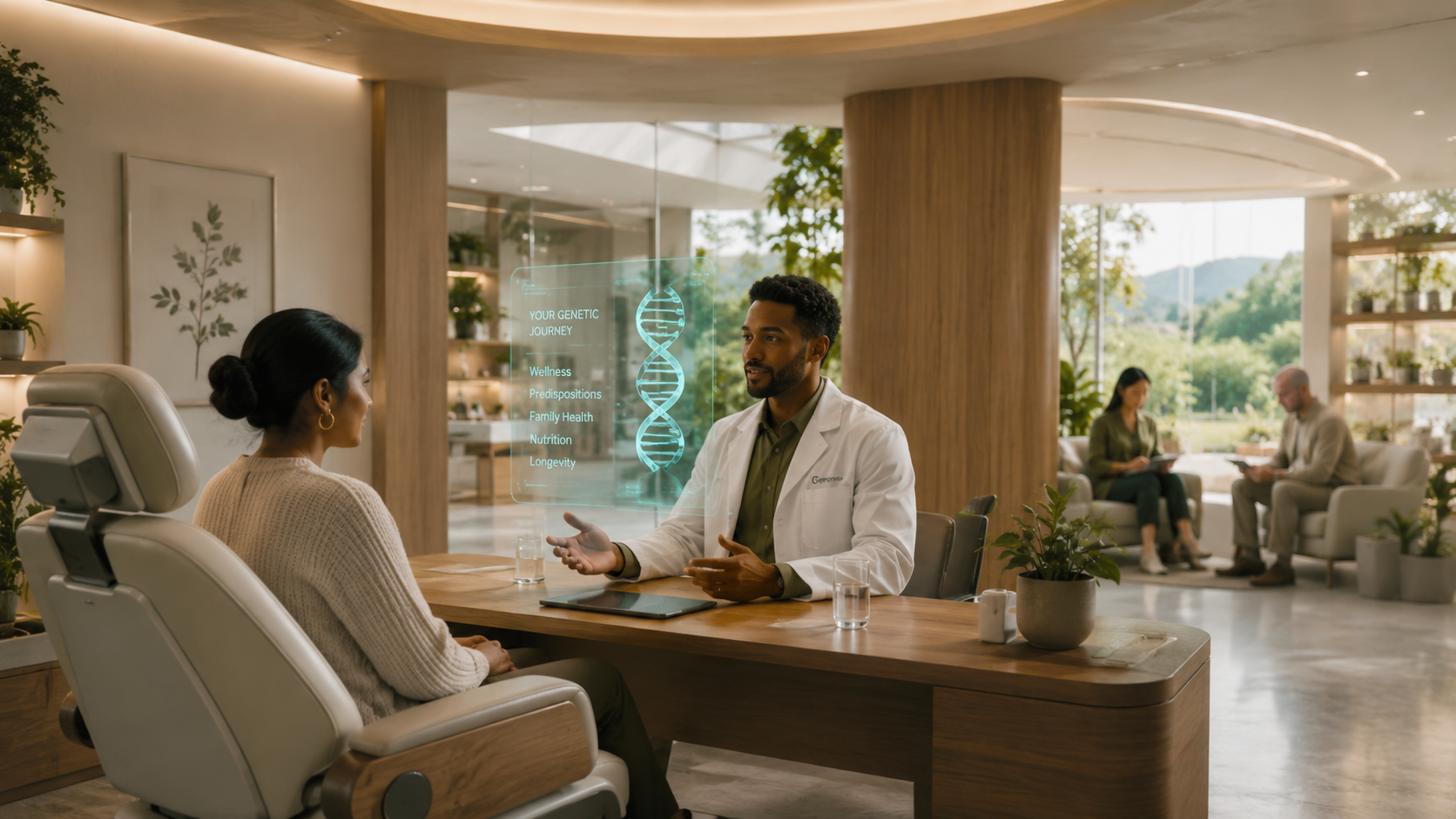
Do not walk blindly into the genomic era
Most people still think genomics means ancestry tests, crime shows, family trees and the occasional headline about designer babies — a dangerously out-of-date picture.
The genomic revolution is already here. It is in cancer care, rare disease diagnosis, fertility clinics, food companies, police investigations, pandemic surveillance, conservation projects, mental health research, insurance debates, biotech startups, government agencies and military planning.
Some of it will save lives. Some of it could reshape society before most people realise they were supposed to have a say.
Because most people meet genomics for the first time already mid-decision — a doctor’s appointment, a fertility clinic, a DNA-test kit under the tree — not before it, when there was still time to think it through.
Why now?
Three changes are happening at the same time. First, genome sequencing has become cheaper, faster and more powerful. We can now read DNA at huge scale, including long-read sequencing, single-cell sequencing, multiomics and spatial technologies that show not only what genes are present, but where biological activity is happening inside tissues.
Second, gene editing has become cheaper, more precise and more widely available. Tools such as CRISPR mean DNA is no longer only something we read. It is something humans can cut, paste, remove, rewrite and redesign.
Third, AI and data processing have changed what can be done with biological information. Human beings cannot manually interpret the amount of genomic, cellular and medical data now being generated. Machines increasingly can.
Put those three things together and something enormous happens.
Life becomes readable. Editable. Inheritable. Programmable.
Cells, microbes, crops, embryos, organs, pathogens, food, medicines, materials and ecosystems are all entering the realm of human design. The fabric of life itself is becoming a building material. This is a shift in what humans can do to bodies, disease, reproduction, food, nature and future generations.
Why you should care
You do not need to be a scientist to be affected by genomics. You may meet it when someone in your family gets cancer. When a child needs a rare disease diagnosis. When a fertility clinic offers embryo screening. When a DNA test reveals a relative no one knew about. When police use genetic data to solve a crime. When food grown from engineered fungi appears in your supermarket. When your health data are stored, shared, leaked, sold or used to train an algorithm.
It is about your body, your children, your family, your food, your privacy, your medical choices and the planet you live on.
The future is already stranger than most people realise
The most shocking part of genomics is not what might happen in fifty years. It is what is already possible now, but barely visible to the public.
I have worked on clinical trials for inherited retinal disease, looking through Genomics England and UK Biobank data for people with the right genetic variants. Colleagues at Moorfields Eye Hospital in London have worked directly on treatments where genetic medicine is delivered into the eye to help people with inherited blindness see. That sounds like science fiction. It is clinical research happening in real hospitals, with real patients, real families and real consequences — and it is why I am writing this book.
Even when the studies are published, the public rarely gets the full meaning of them. Even the best-informed AI systems can miss the context. A paper may say “inherited retinal disease gene therapy trial”. What that means in human language is: a child who was born blind may begin to see the world.
Eye disease is only one example. Scientists have already edited human embryos. CRISPR-edited babies have already been born. CRISPR therapy for sickle cell disease has already been approved. Researchers can grow miniature human organs from stem cells, connect living tissues to microchips and use them to study disease, test drugs and move toward personalised medicine.
DNA is no longer only a medical sample. It can be a police lead, a family tree, a privacy risk, a storage device, an identity marker or a biological blueprint. Millions of 23andMe profiles were exposed in a data breach. Health data linked to UK Biobank participants was advertised for sale on Alibaba. Forensic DNA can already be used to infer ancestry, relatives, pigmentation and aspects of appearance from biological evidence.
Biology is becoming industrial. Engineered microbes can make food, fragrances, medicines, materials and enzymes. Startups are working on designer proteins, lab-grown tissues, personalised nutrition, biological materials and cell-based production systems.
Food grown from fungi. A face inferred from a drop of blood. DNA used for secret information storage. Genetic medicine placed into an eye. Human tissues grown on chips. Embryos selected before birth.
This is the present, badly explained.
The public is still being sold genetic testing kits as quirky gifts, while the same category of information could affect their children, grandchildren, relatives, insurance, privacy, medical choices and family secrets. The genomic future is already here — unevenly distributed, unevenly regulated and barely understood.
What the book gives you
The Genomic Power Shift starts with what is already happening, then follows it into the next five, ten and fifty years.
A patient whose cancer is decoded at molecular level.
A child whose rare disease is diagnosed through genome sequencing.
A family discovering ancestry secrets through a DNA test.
A fertility clinic offering embryo selection.
A startup growing food from engineered fungi.
A police force using DNA to infer a suspect’s face.
A conservation team sequencing endangered species before they disappear.
A city preparing for engineered pathogens.
A future where shelter, food, clothing and medicines may be custom-grown from fungi, bacteria and cells.
The book asks the questions you actually need answered:
Is this safe?
Who owns the data?
Who gets access?
Could this help my child?
Could this be used against me?
Who regulates it?
Who profits?
What happens if it goes wrong?
What kind of future are we building?
Written for curious readers, not genetics enthusiasts
This book is for anyone who wants to understand the most powerful biological shift of our time before the decisions are made for them.
It is for the person buying a DNA test as a Christmas present.
The parent wondering what embryo screening means.
The patient trying to understand a cancer report.
The family suddenly dealing with a rare disease diagnosis.
The person who thought ancestry testing was harmless fun.
The citizen who does not want the future of life decided quietly by companies, investors, governments and laboratories.
It puts genomics in your kitchen, your hospital appointment, your family tree, your supermarket, your child’s future, your police database, your fertility clinic, your voting booth and your bloodstream.
You do not need to become a geneticist. You do need to understand enough not to be fooled, frightened into silence, sold nonsense, excluded from decisions or sleepwalk into a future designed by someone else.
Start with these parts of the book
Read it before the future is normal
The genomic era will not ask whether you are ready. It will arrive as a medical test, a food label, a police technique, a fertility option, a data breach, a family discovery, a cancer treatment, a pandemic response, a school debate, a political argument or a product someone wants you to buy.
The choice is whether you understand it while there is still time to shape it.
Occasional notes on genomics, AI, biotechnology and the decisions shaping medicine, society and the living world.