The public has had its AI shock. Genomics is next.
You, your dog, your breakfast, your houseplants, your cancer risk, the bacteria on your skin, the chicken in your sandwich and the mould in the back of your fridge all belong to the same living system. What unites them is DNA.
For most readers, genomics still sounds like something happening somewhere else: in laboratories, hospitals, fertility clinics, biotech companies and crime dramas. It is already moving into ordinary life: GP appointments, cancer treatment, newborn screening, IVF decisions, food systems, ancestry tests, conservation, policing, insurance debates, investment decks and family WhatsApp groups.
Because the acquiring editor who signs the definitive genomics book a year early will own the category — the way Silent Spring, No Logo and The Sixth Extinction were each signed before their subject became unavoidable.
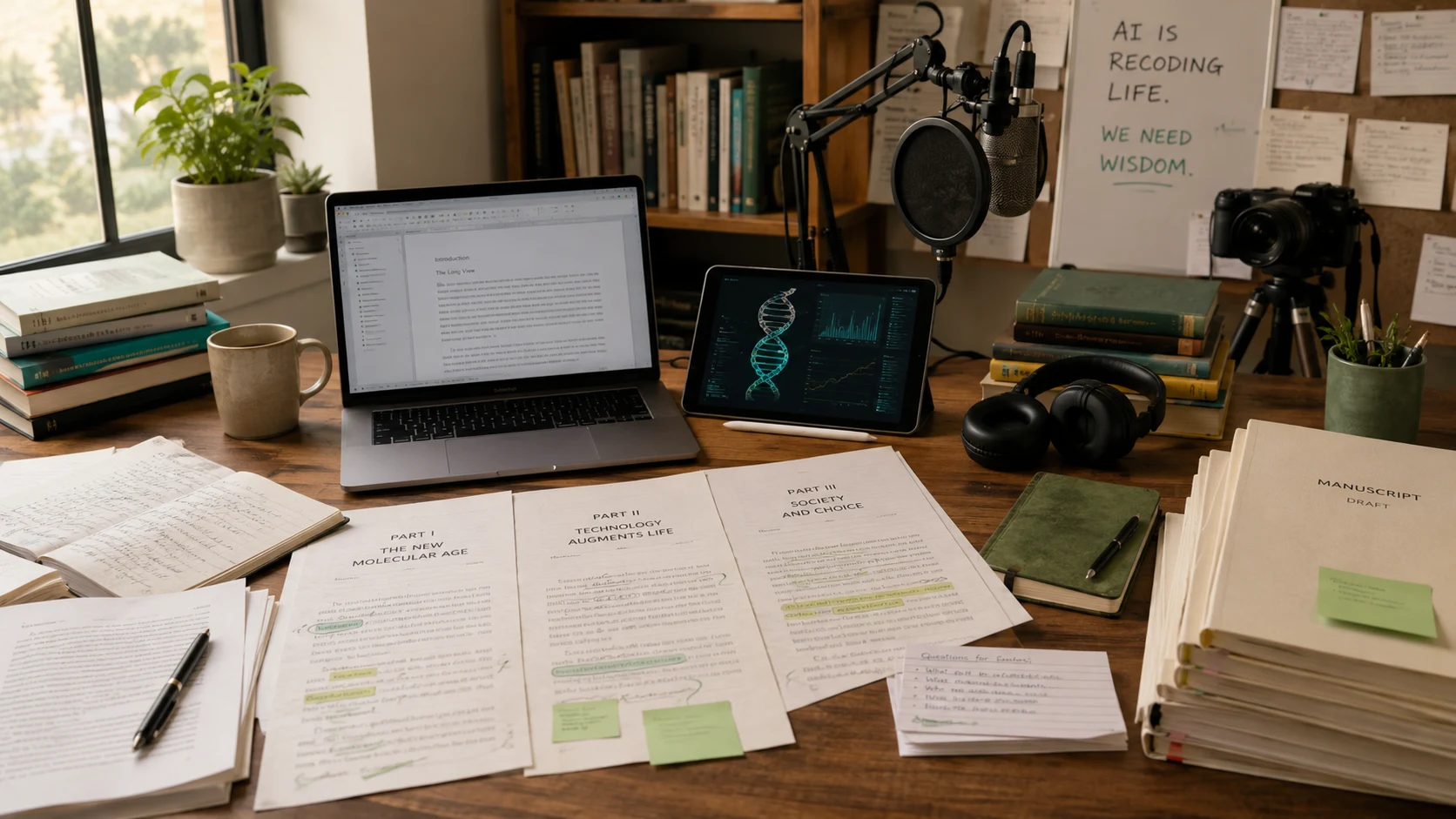
The Genomic Power Shift is a trade nonfiction book about what happens when the code of life becomes readable, searchable, editable, valuable and political. I am looking for the right publisher, editor, agent or publishing partner.
Why now?
Genomics is scaling from specialist laboratories to mass adoption because three things have changed at once: sequencing has become cheap, genome editing has become far easier, and AI now makes it possible to interpret biological data at a scale no human team could manage manually.
DNA is no longer only something we read. It is becoming something humans can analyse, edit, design and build with. That reaches from personalised medicine, vaccines and rare disease diagnosis to genetically modified food, gene drives, synthetic organisms, biosecurity risks and the possibility of designing future humans.
The impact on society and the biosphere may be more transformative than AI, with fewer clean boundaries and no simple stop button. When genetic changes are heritable, released into ecosystems or scaled through populations, they can be extremely difficult, sometimes impossible, to reverse.
Why publishers should care
This is the genomics book with movement potential. It sits in the tradition of books that turned hidden systems into public arguments: Silent Spring, No Logo, Fast Food Nation, The Omnivore’s Dilemma, The Sixth Extinction and The Uninhabitable Earth.
Those books changed what people noticed. The Genomic Power Shift can do that for genomics: make readers see that DNA is no longer background biology, but a new layer of power running through medicine, food, fertility, policing, privacy, biodiversity, insurance, defence, business and family life.
The public conversation is coming anyway. The question is whether readers meet genomics through panic headlines, miracle-cure stories, company marketing and half-remembered school biology, or through a book with authority, humour, range and teeth.
What readers will feel
I want readers to have the feeling of finally understanding something they have heard about for years but never quite had the words for. I want someone to read the section on polygenic risk scores and think: “Oh. I actually understand what this is now. I can explain why it might be useful, why it might mislead, why the data matters, why it may not work equally well for everyone, and why using it in embryo selection is a very different argument from using it in public health research.”
That is the level of understanding the book is built to create: enough science to stop bluffing, enough context to spot nonsense, and enough confidence to ask better questions. Readers should be able to argue at dinner about whether to get their genome sequenced, whether genetically modified food is safe to eat, whether tumour data should be shared for research, or whether newborn genomes should sit in a national health database.
The material is already extraordinary
Some of what is happening in genomics sounds as if it has escaped from science fiction, fairy tales or a slightly deranged grant proposal: digital twins, lab-grown tissues, heart organoids made from reprogrammed skin cells, gene therapies restoring sight, brain cells grown on microchips, stolen genomes advertised for sale, claims about predicting faces from DNA, and companies promising to push human lifespan far beyond anything medicine can currently deliver.
Some of this is real now. Some is early, fragile and over-sold. Some is technically impressive but socially explosive. Much more will become normal over the next five to ten years, and many readers will only notice when a doctor, school, insurer, fertility clinic, police officer, food label or family member suddenly makes genomics personal.
The voice
The book is written for intelligent non-specialists who do not want to be patronised, bored or marched through genetics like they have accidentally enrolled in a damp undergraduate module. It explains difficult ideas through the things people already care about: illness, children, food, family, sex, ageing, privacy, fairness, animals, ancestry, crime, money, death, hope and whatever is growing at the back of the fridge.
The science is serious. The prose does not have to stand at attention. Genomics is astonishing, funny, uncomfortable and morally complicated, and the book lets readers feel that instead of hiding everything behind acronyms, diagrams and phrases like “stakeholder engagement.”
Why I can write it
I am a genomics scientist, bioinformatician, founder and strategist. I have worked across cancer, rare disease, neglected tropical disease, biodiversity, population genetics, clinical genomics, biodata infrastructure and AI-driven biology, and I have spent years talking to the people building, funding, regulating, diagnosing, commercialising and worrying about this field.
My genomic analysis pipelines have supported diagnosis and treatment selection for more than 30,000 patients with cancer and rare disease. I have sat in molecular tumour boards with pathologists and clinical geneticists while patient results were reviewed variant by variant, report by report, treatment option by treatment option.
The book is written from inside the machinery, but for people outside it. That is the point.
Main selling points
- A major public-interest subject arriving after the AI wave.
- Movement potential: a book that can change what readers notice about medicine, food, fertility, privacy, policing, biodiversity and future generations.
- Written by a genomics expert with clinical, research, commercial and strategic experience.
- Strong voice: authoritative, funny, direct and readable.
- Built around questions ordinary readers already have, not the structure of a genetics textbook.
- Explains hard ideas in a way that makes readers able to discuss them.
- Strong media potential across health, science, technology, ethics, parenting, food, crime, environment, business, policy and current affairs.
- Useful to general readers, journalists, teachers, clinicians, founders, investors, policymakers and patient groups.
Publishing enquiries
I am looking for a publisher, editor, agent or partner who understands that genomics is moving from specialist science into public life, and that the public needs a book with authority, humour, clarity and teeth before the debate is dominated by hype, fear or corporate language.
Available on request: proposal, chapter outline, sample chapters, author biography, platform overview, comparable titles, selected sources, and media and audience angles.