Genomic Medicine, Stem Cells and Health
Part 04 · The Genomic Power Shift
Genomics becomes very real when someone you love gets sick. It becomes real when a child has symptoms no doctor can explain, when a cancer treatment stops working, when a newborn screening result changes a family’s future, or when a fertility clinic offers genetic information about an embryo before it has even become a baby.
This part of the book is about medicine at the point where biology, hope, money and ethics collide. Genomics can diagnose diseases that once remained mysterious for years, help match cancer patients to treatments, explain why one person reacts badly to a drug that helps someone else, and open the door to gene therapies that would have sounded impossible a generation ago.
It can also produce uncertainty, impossible choices, crushing costs and the occasional feeling that healthcare has been handed a Ferrari before anyone finished building the roads.
Because when it is your child, your parent or your own diagnosis on the line, whether a genomic test can actually change the treatment — not just name the disease — is the only question that matters.
Rare disease is not rare
A rare disease may affect very few people individually, but rare diseases together affect tens of millions of people. In Europe, between 27 and 36 million people live with a rare disease, and around 80% of rare diseases are thought to have a genetic origin.
That is why genomics matters so much here. For many families, the hardest part is not only the illness itself, but the diagnostic odyssey: years of appointments, scans, blood tests, wrong turns, half-answers and the horrible feeling that nobody can quite name what is happening.
Genome sequencing can change that. It can sometimes find the mutation behind a child’s symptoms, connect a family to other patients with the same condition, suggest treatment options, explain recurrence risk, or simply end years of not knowing.
A diagnosis is not the same thing as a cure. But for many families, knowing the name of the disease is the first step towards understanding, and it can lead to better prognosis, contact with other patients, and treatment opportunities. Through my work in Clinical Genomics, I know the exceptional challenges around finding candidate variants, trying to work out if they could actually be what is causing the disease, and then the agony of deciding what to tell the patient. The main challenge is that there are still so many uncertainties, and so little we know, so quite often there are no clear answers. Every time there is — a clear answer, a diagnosis, and maybe even a treatment — it is a cause for celebration.
Cancer treatments are becoming personalised
Cancer used to be described mainly by where it appeared: breast, lung, bowel, blood, brain. That still matters, but genomics adds another layer: what is driving the tumour, which mutations it carries, which pathways keep it alive, and which treatments might actually work.
This is why the author Magdalena Zarowiecki’s experience matters here. Her genomic analysis pipelines have helped support diagnosis and treatment selection for more than 30,000 patients with cancer and rare disease. This is not a topic viewed from a safe distance; it is a field where genomic reports already enter real clinical meetings and real treatment decisions.
The promise is obvious. A tumour can be read more precisely, a treatment can be chosen more intelligently, and a patient may avoid drugs that were never likely to help them.
The problem is also obvious. Increasingly, diagnoses and patterns are turning into knowledge, which is then turned into drug targets and therapies. The progress is very fast — sometimes so fast the treatments may not always be as effective as we hope for them to be — but at the same time also too slow for the patients who have terminal cancers right now.
Vast progress in this space is being made at breakneck speed, and oncology and genetics departments and wards across countries are being massively invested in. Personalised medicine approaches are completely re-writing standard-of-care – to newer, more effective and better care, for those who can afford it. In only a few years, genomic sequencing will not be “a last attempt”, but the first diagnostic test to be done, for many diseases.
Possibly, we are looking at a future where all newborns will have their genome sequenced at birth, as an “Instruction manual”, which their doctors can use as a look-up reference for any illness you have during the rest of your life.
The same drug does not work the same way in every body
Genomic medicine is not only about rare diseases and cancer. It is also changing how ordinary medicines are prescribed. The same drug can help one person, do nothing for another, and cause serious side effects in a third. Sometimes the difference is hidden in how their bodies process, transport or respond to the drug.
Pharmacogenomics asks a simple but powerful question: can we use genetic information to choose the right medicine, or the right dose, before someone is harmed by trial and error?
This is not a magic lookup table. Many drug responses depend on age, sex, other medicines, kidney and liver function, diet, ancestry, environment and chance. But in some areas, genomic information is already useful. The future of medicine will not be genomics alone. It will be genomics plus clinical judgement, patient experience, careful interpretation, ethics, regulation, access and enough humility to admit when the data are not ready.
Gene therapy changes the argument
Once genomics can identify the cause of a disease, the next question is whether medicine can do anything about it. For a long time, many genetic diagnoses came with the bleak phrase: “There is no treatment.” That is changing, slowly and unevenly, but dramatically enough that nobody working in genomics can ignore it.
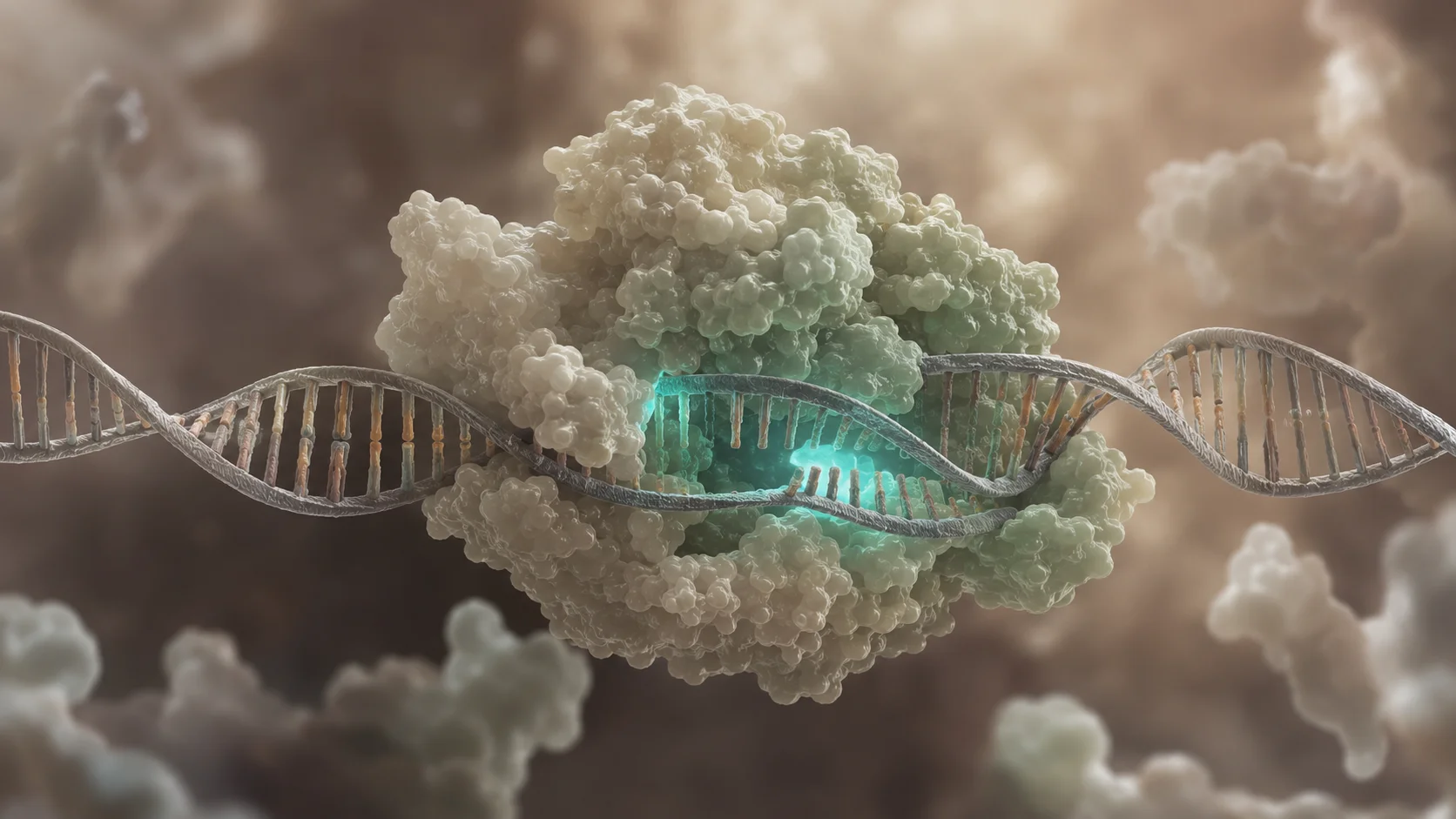
In 2023, the FDA approved Casgevy and Lyfgenia for sickle cell disease. Casgevy became the first FDA-approved therapy using CRISPR/Cas9 gene editing, and it works by editing a patient’s own blood stem cells before returning them to the body.
That is an astonishing moment. A severe inherited disease can now be treated by rewriting the patient’s cells.
It is also not a magic wand. These therapies can be complex, risky and hospital-intensive.
A human heart in the lab
Stem cells take this shift one step further, from reading disease in DNA and treating it, to modelling disease in living human cells. This is where medicine starts to properly look like science fiction. The basic idea is simple enough. Some cells have options. Under the right conditions, they can become different kinds of cells. Even more astonishingly, scientists have learned how to take some adult cells and push them backwards, making them behave more like stem cells again.

That means a small sample of skin can be turned into stem cells, and those stem cells can be guided into becoming heart or brain cells. In the manuscript, this appears through a conference-dinner story: a researcher works on heart rhythm disorders by taking skin cells from patients, turning them into stem cells, then turning them into heart cells that show the same rhythm problem as the patient’s own heart.
That is the power of modern cell biology. You can study a person’s disease in living human cells without needing to experiment directly on the person’s heart.
Mini-organs, chips and the end of the mouse monopoly
Medicine has always relied heavily on animal models, partly because experimenting on humans is frowned upon for several excellent reasons. But animals are not tiny people wearing fur, and many disease models only imitate human biology badly.
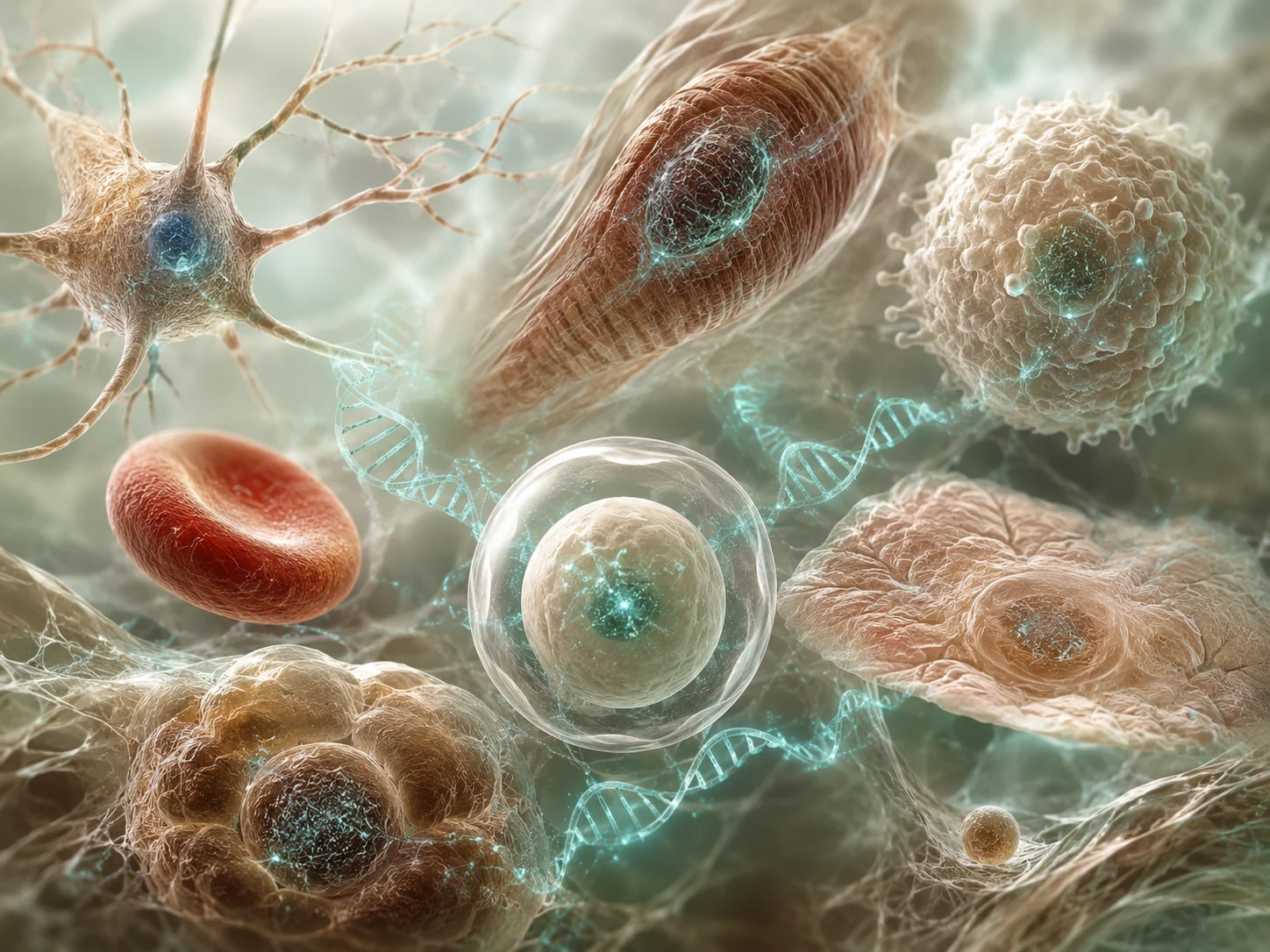
Stem cells, organoids and organs-on-chips are beginning to change that. Human cells can now be grown into small three-dimensional tissue models, sometimes called organoids, which can mimic aspects of organs such as intestine, liver, kidney, brain or tumour tissue. Human cells can also be grown on microchips with tiny channels that simulate some features of blood flow, drug delivery and organ function.
This does not mean we can casually grow a spare adult liver next to the coffee machine. Organoids are usually tiny, simplified models, not fully functional replacement organs.
But they matter enormously. They can help researchers study disease, test drugs, reduce some animal experiments, and move medicine toward treatments based on a patient’s own cells.
Newborns, embryos and the old ghost of eugenics
Genomics before and just after birth is one of the most powerful and ethically difficult parts of the whole field. Newborn sequencing could help identify treatable genetic conditions early, before a baby becomes seriously ill. Genomics England’s Generation Study, for example, aims to sequence the genomes of 100,000 newborn babies and screen for more than 200 rare genetic conditions.
That sounds like an obvious good. If a serious disease can be found early and treated, why would anyone wait?
But the hard questions arrive quickly. Which conditions should be tested? What counts as treatable? What should parents be told? What should be saved for the child to decide later? What happens if the result predicts a disease that may not appear for decades, or may never appear at all?
The same ethical tension appears before birth. Preventing a child from inheriting a devastating disease is one thing. Sliding from disease prevention into embryo “improvement” is another. The history of eugenics is not ancient history; it is a warning label attached to every technology that claims it can make better humans.
A cure that nobody can afford is still a crisis
The hardest questions in genomic medicine are not only scientific. They are also about who gets access, who pays, who interprets the result, and who is left waiting.
Complex genomic medicine needs infrastructure, interpretation, expert teams, money and time. A cancer report full of variants is not useful if nobody knows what to do with it, if the right drug does not exist, or if the drug exists but the healthcare system cannot afford it. A gene therapy can be scientifically brilliant and still fail a basic moral test if only a tiny fraction of the people who need it can ever receive it. Wealthy patients may get options that poor patients never see, and healthcare systems will have to decide what they can afford to pay for.
There are significant challenges here around care, money, trust, fairness and risk. But inclusion is not only a moral issue. The more people are diagnosed and treated, across more populations and health systems, the better the evidence becomes. Better evidence can make diagnosis and treatment more accurate, more efficient and eventually less expensive.
The price of genomic medicine is shaped not only by science, but by patents, licensing, manufacturing, reimbursement, national health systems and the bargaining power of companies and states.
Question Box
Would you sequence your newborn baby?
Imagine your baby could have their whole genome sequenced shortly after birth. The test might find a serious genetic disease early enough to treat it. It might also find uncertain results, future risks, carrier status, adult-onset conditions, or information your child may one day wish had been left for them to decide.
Would you say yes? Would your answer change if the test was offered by a national health service, a university study, a private company or an app with cheerful branding and a worryingly lax privacy policy?
And if the result said your baby had a condition that could be treated, but the treatment cost more than your house, what then?
Fact Box Preview: what genomic medicine can actually do
Genomic medicine can sometimes identify the cause of a rare disease, classify a tumour, guide cancer treatment, identify inherited risk, support newborn screening, and help families understand recurrence risk. It cannot explain everything, predict your whole future, remove uncertainty from medicine, or turn every diagnosis into a cure.
Sometimes the result is clear. Sometimes it is a “variant of uncertain significance”, which is basically science saying: “We found something, but please do not make life decisions around it yet.” Currently, that is the most common result a patient with a rare disease will get.
“We don’t know” is a frustrating answer, but in my experience also a hopeful one. I hear: “We don’t know — yet — but there are many people around the world working to help you and others, and maybe in the next one to five years you’ll be one of the lucky ones we do find answers for, when we know a little bit more.”
Why this matters now
Medicine is moving from “what disease do you have?” toward “what biological mechanism is driving this disease in this person, in this tissue, at this time?” That is a profound shift, and it will affect patients, families, clinicians, hospitals, insurers, governments and anyone who pays tax.
Some of this future is extraordinary. Children may be diagnosed faster, cancers may be treated more precisely, inherited diseases may become treatable, and medicines may become less like throwing darts at a pharmacy shelf.
Some of it will be difficult. Data may be generated faster than doctors can interpret it. Parents may face genetic choices they never asked for. Healthcare systems will have to decide how to turn astonishing science into ordinary care.
That is why genomic medicine is no longer a niche medical subject. It is becoming part of how societies define illness, risk, responsibility, fairness and hope.
Continue the journey
Next, the book leaves the clinic and follows genomics into food, law, materials, agriculture, industry, crime and digital security. Once DNA becomes a practical tool, medicine is only the beginning.
Further reading and source notes
- European Commission: rare diseases in Europe
- Genomics England: 100,000 Genomes Project
- Genomics England: Generation Study
- NHS: newborn testing for more than 200 genetic conditions
- FDA: first gene therapies for sickle cell disease
- Nature Reviews Methods Primers: organoids
- NHS Genomic Medicine Service
Read the book before your next medical future arrives as a test result no one has time to explain properly.