
Genomics Applications
Part 05 · The Genomic Power Shift
Biology leaves the hospital and starts turning up everywhere else
Suddenly genomics is in agriculture, food production, crime investigation, materials science, drug discovery, perfume, enzymes, factories, police databases, intellectual property law and digital security. DNA is no longer only medical. It is information, chemistry and even a building material with millions of ways to use it.
This is where the book asks one of its simplest and most dangerous questions: if living cells are tiny manufacturing systems, and DNA is part of the code that tells them what to do, what can we make life produce for us? The answers range from lifesaving to delicious to legally absurd to “maybe let’s not release that one near any local hedgehogs just yet.”
Because the DNA-based product on a supermarket shelf, in a police lab or in a bottle of perfume did not ask your permission to exist, and the rules for what counts as safe, disclosed or patentable are still being written after the fact.
Below are some excerpts from the book, on these topics:
This is where the genomic power shift becomes practical
The book follows genomics from CRISPR into food, forensic DNA, engineered microbes, biomaterials, DNA nanotechnology and the strange possibility that the code of life may also become a code for storing information.
From PDF to Word document
In the early days of genomics, scientists mostly read DNA. That was already revolutionary, but it was still like having a static PDF: you could inspect the text, search it, compare it, admire it – and occasionally very confidently misunderstand it.
Gene editing changes everything! With CRISPR and related tools, DNA starts to look more like a Word document than a PDF. However, biology is not exactly like Microsoft Word. It has no undo button, no polite spellcheck, and occasionally responds to your elegant edit by doing something deeply inconvenient. That is the case with CRISPR gene editing technology. Originating from some obscure flesh-eating bacteria, CRISPR and Cas9 or Cas12a enzymes has been refined, and given different guide RNAs can create almost any DNA modification that you want, with basepair precision. In reality, the edits can go in several places, or miss some cells completely. So what you end up with is not a 100% replacement of “if” to “but”, more more like 90% of “if” were replaced with “but”, 3 “but” ended up in other places, funnily changed “real” to “rebuttal”, and there are still 2 “if”s and nobody knows why. If Microsoft had shipped that version of Word, it might have been even less popular than Windows 8 (2012).
Dinner, but make it engineered
Food is one of the places where genomics will become impossible to ignore, because people are strangely attached to eating several times a day. Genetically engineered crops are already normal in parts of global agriculture. In the United States, more than 90% of corn, soybean and cotton acres are planted with genetically engineered varieties, which means this is not a fringe experiment hiding in a suspicious greenhouse – it is on your dinner plate.

Increasingly, since we can engineer genes with more and more accuracy, we can start to create foodstuffs like nothing you’ve ever seen before. Imagine designer cooking oil that smells faintly of violets (produced by hamster cells in a bioreactor), protein cubes that taste like chocolate, or food grown from engineered fungi in tanks under a city instead of on a farm.If bacteria could be engineered to make your perfect nutrition, taste like excellent noodles and solve the climate impact of dinner, would you eat them for the rest of your life? Many people say no until the bacteria are called “artisan fermented protein” and served with chilli oil.The future of food may not look like a silver pill or a sad beige protein cube. It may look like vats of engineered microbes making fats, flavours, proteins and oils while everyone argues about whether this is disgusting, brilliant, or just yoghurt with a massive venture-capital backing.
DNA at the crime scene
Forensic DNA used to be mostly about matching a biological sample to a person. Increasingly, it can also be used to infer things about an unknown person from the DNA they left behind.
Forensic DNA phenotyping can estimate externally visible traits such as eye colour, hair colour, skin pigmentation, ancestry and sometimes age-related information. Some companies also use genetic genealogy to identify relatives and build family trees that may lead investigators to a suspect or unidentified remains.
This can solve crimes and identify victims, which is obviously powerful. It can also move society toward molecular surveillance, where the question is no longer only “whose DNA is this?” but “what can we infer about this person, their relatives and their body from the trace they left behind?” Forensic DNA phenotyping is real. DNA from a biological trace can be used to estimate traits such as ancestry, eye colour, hair colour, skin pigmentation and aspects of appearance, and some companies generate face-like composites from DNA to provide investigative leads. These DNA facial reconstructions can be so accurate they can be matched with real photographs, and the technology has already been deployed in real investigations, to identify both perpetrators and victims.
DNA as a building material
DNA is no longer only something we read in living organisms. It is becoming a medium for storing, hiding and building things. As data storage, DNA is especially powerful because it can hold enormous amounts of information at molecular scale, remain stable for long periods, and be copied or moved easily. That also makes it unsettling: information encoded in DNA could be hidden in a speck of dust or even in a living organism. Recent work has shown random access and semantic search in DNA data storage, while DNA cryptography explores how DNA can conceal and secure messages.
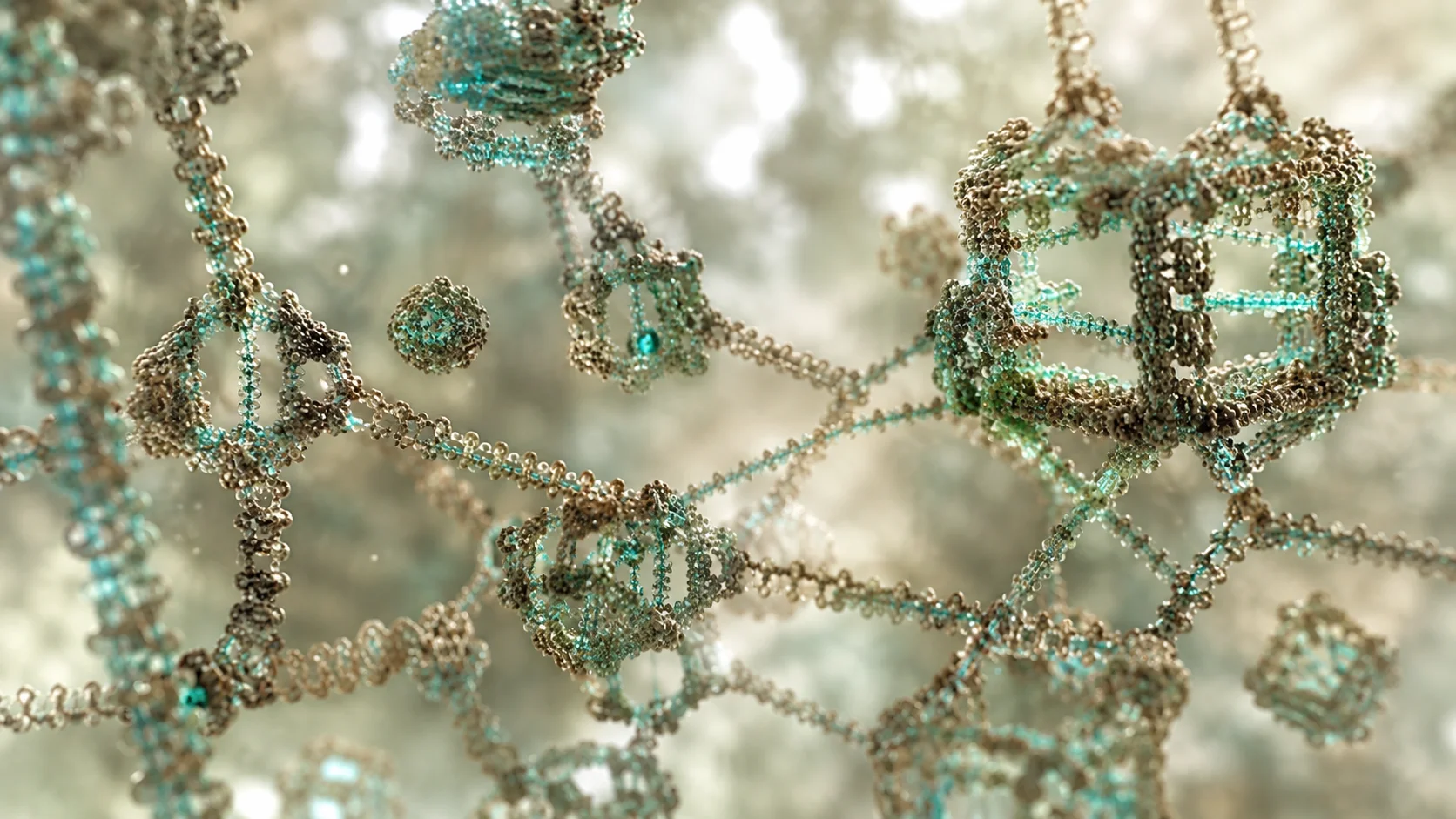
The same properties that make DNA useful for memory also make it useful as a material. Researchers can use the physical properties of DNA to make nanoscale robots, folding strands into programmable DNA origami structures, molecular switches, sensors, and delivery systems. DNA is an exciting material to build things from, as long as we can understand and control the potential side-effects, of our working structures at the scale of molecules.
Question Box
If you could cut and paste DNA, what would you make?
Imagine you could freely edit DNA in humans, animals, plants, fungi or microbes. Would you cure inherited disease, make crops survive drought, engineer bacteria to clean pollution, grow food without animals, create glowing trees, remove invasive species, or design yourself a houseplant that finally stops dying out of spite?
Now ask the less fun question. What should be banned, even if it becomes technically possible?
This is the real heart of genomics applications. The tools are becoming powerful enough that “can we?” is often the least interesting question. The better question is “should we, who benefits, who carries the risk, and what happens if it escapes the tank?”
Why this matters now
Some applications will save lives, reduce suffering, improve crops, replace animal experiments, clean pollution and make industry less destructive. Others may deepen inequality, create new monopolies, intensify surveillance, damage ecosystems or turn the living world into a commercial platform before most people have realised the terms and conditions changed.
That is why this part of the book matters. Once DNA becomes useful, everyone wants a piece of it, and not everyone will be careful.
Continue the journey
Next, the book moves from human invention to the wider living world. If genomics can help us design biology, it can also help us understand what we are losing in the biodiversity crisis, track environmental crime and read ecosystems before they collapse.
Further reading and source notes
Read the book before biology becomes another industry you only notice after it has already redesigned your dinner, your medicine, your privacy and your planet.