Good Advice From a Geneticist
Practical genomics, for your everyday life
More private than your passport number. More private than your credit card. More private than your search history. Honestly, I would not hand it over to anyone I would not also trust with my medical records, my family secrets, my bank details and my children.
That may sound dramatic. It is not.
Your genome can say things about your health, your relatives, your ancestry, your children and sometimes about people in your family who never agreed to be part of the story. It can reveal things you were not looking for. It can also be misunderstood, overinterpreted or used in ways you did not expect.
So here is some practical advice from a geneticist.
The aim is not to make you afraid of genomics. It is to help you use it when it helps, question it when it overreaches, and protect yourself from the small print in the consent form.
Advice 01
Do not use DNA to rank people
One of the worst ways to misunderstand genetics is to use it as a ranking system for human beings. Genomics does not support racism. It does not support xenophobia. It does not support caste thinking, eugenics, genetic aristocracy, or the idea that one group of people is genetically “better” than another.
Human beings are mixed, related and overlapping. Most human genetic variation exists between individuals, not neatly between the social categories people call race. Choosing one visible trait—skin colour, eye colour, hair texture, height, ancestry, whether someone can roll their tongue—and using it to include, exclude, admire or fear a whole group of people is as ridiculous as it sounds.
None of those things tells anyone whether you are kind, brave, clever, trustworthy, loving, safe, generous, a good parent or a good friend. Genetics can help us understand bodies and minds. It cannot measure human worth.
Advice 02
Do not sequence your genome just for fun
I know it sounds tempting. Spit in a tube, send it off, get a nice colourful report telling you where your ancestors came from, whether you like coriander, whether you are likely to be good at sprinting and whether you have some serious health risk.
But your genome is not a personality quiz.
If you sequence your genome, you might learn something useful. You might also learn something you wish you had not known. You could find out about disease risks, unknown relatives, unexpected ancestry, or that someone in your family is not biologically related in the way everyone thought.
And here is the awkward bit: your genome is not only about you. It also says things about your parents, siblings, children, cousins and future descendants.
So before you do it, ask yourself: do I actually want to know? And what will it reveal about the people closest to me?
Advice 03
If you do sequence it, keep control
If you have your genome sequenced for a good reason, try to keep as much control over the data as possible. This is easier said than done.
Your DNA data may pass through labs, companies, databases, cloud storage, research projects and privacy policies written in the kind of language that makes you fall asleep faster than drinking a glass of warm milk.

Before you click ‘I agree’, try to find out:
- Who stores the data?
- Who can see it?
- Can they sell it?
- Can they share it with researchers?
- Can they share it with police?
- Can they keep it forever or can you delete it later?
- Can your relatives be found through it?
If the answers are vague, assume the risk of a data breach is significant.
Advice 04
Your DNA is everywhere anyway
Now, having said all that: do not go mad. You leave DNA everywhere.
On coffee cups. On forks. On toothbrushes. In hair. In spit. In dust. On your clothes. In your bed. On the chair you are sitting on. A lot of the dust in your house is basically tiny bits of you. Lovely thought.
You cannot live in a bubble.
If someone really wants to steal your DNA, they will probably manage. That does not mean you should be paranoid. It means you should be sensible. Do not hand over a clean digital copy of your genome unless you have thought about it properly.
There is a difference between accidentally leaving a hair on a train seat and uploading your entire genome to a company, and giving them unlimited access to do what they want with it. Once you have given over control to someone else, assume you have lost control of it forever.
Advice 05
Do not believe every genetic claim
Genetics is powerful, but it is not magic.
Some genetic results are very important. Some can explain a serious disease. Some can guide cancer treatment. Some can help families finally understand what has been going on for years.
But a lot of genetic information is messier than people think.
A gene variant may increase risk without meaning you will get a disease. A result may be uncertain. A “risk score” may not apply well to you. A test may be based on weak evidence. And anything claiming to tell you your perfect diet, perfect sport, perfect skincare routine or perfect personality type from DNA alone should be treated with deep suspicion, because they don’t know your life situation.
Your genome matters. But so do your life, environment, habits, luck, family, food, infections, stress and sleep.
Biology is generally a lot more chaotic than marketing departments would like. Your preferences and bodily cues—what you like, how you feel and how your body responds — can sometimes be as informative as genetic biomarkers, so listen carefully to your body.
Advice 06
Use genomics when it actually helps
I do not want you to come away from this thinking genomics is scary and should be avoided. Quite the opposite.
Genomics can save lives. It can diagnose children with rare diseases. It can help choose cancer treatments. It can track infections. It can explain inherited conditions. It can help researchers understand biology in ways that were impossible only a few years ago. But it deserves respect and caution. So the advice is simple: do not treat your genome like a toy, a horoscope or a discount code for personalised vitamins. The company may also unbeknownst to you use your DNA or tissue for “any other purpose”, if that was part of their small print on page 59.
Treat it like something precious, because it is one of the most personal forms of information you have. It is what makes you you—a truly unique person—one of a kind.
Advice 07
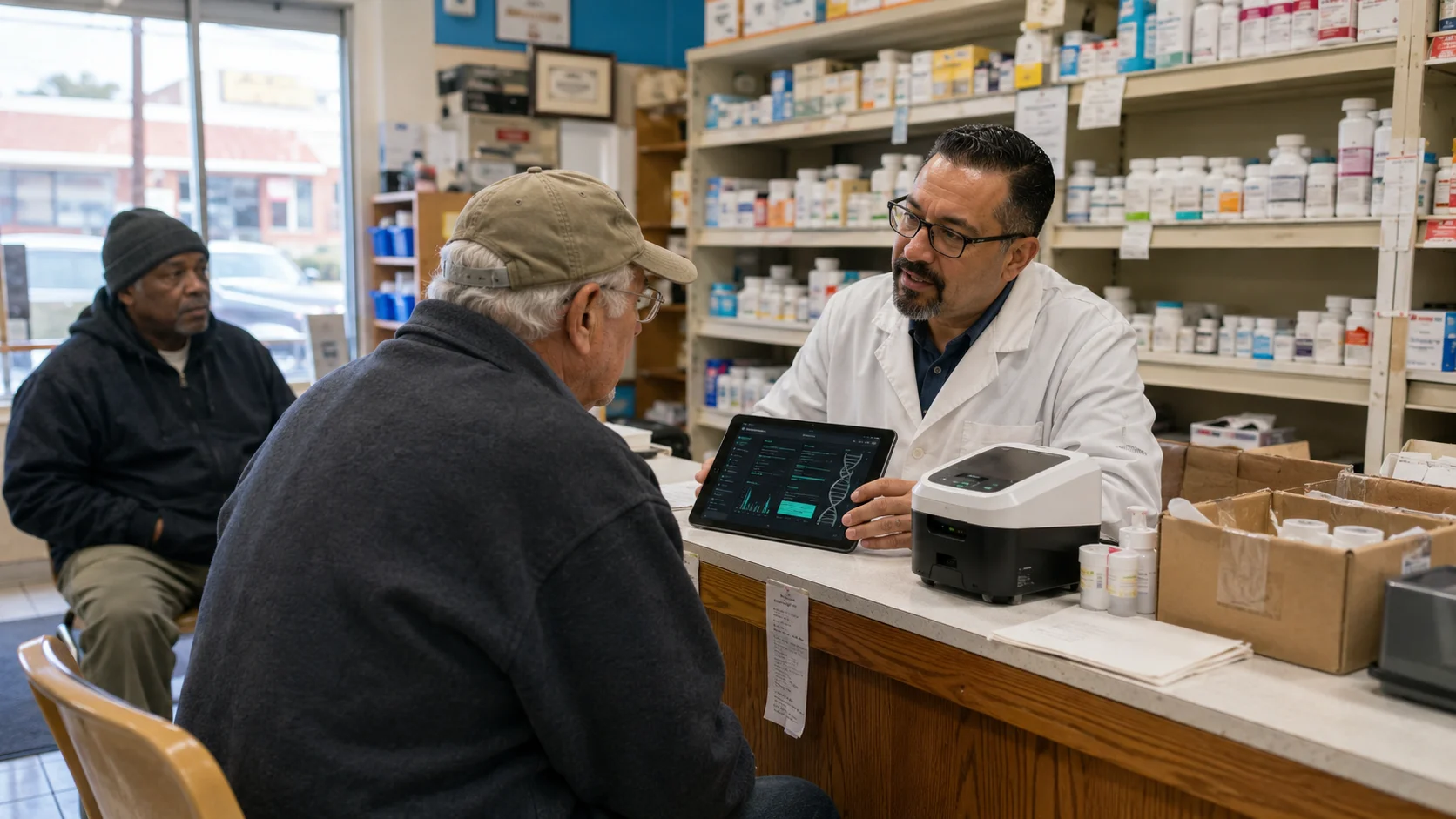
Do your pharmacogenomics, if you can control the data
Here is one genetic test I think many more people should have: pharmacogenomics. This is the part of genomics that asks how your DNA affects the way your body handles medicines. ASHG explains pharmacogenomics as using a person’s genetics to help identify the right drug and the right dose, and the NHGRI pharmacogenomics fact sheet explains why the same medicine can work beautifully for one person and make another person very ill.
This is the useful version of personalised medicine: knowing whether you are more likely to need a different medicine, a different dose, or extra caution before someone gives you a drug that is routine for everyone else. A medicine can be ordinary in the population and still be dangerous for you.
The Dutch have been ahead here. The Dutch Pharmacogenetics Working Group develops evidence-based recommendations for using pharmacogenetic results in prescribing, and the Dutch pharmacists’ organisation KNMP explains that pharmacogenetic recommendation text is incorporated into the Dutch G-Standaard, where it can be used during prescribing and dispensing. Dutch researchers have also developed and piloted a pharmacogenetic passport: a practical way of carrying clinically relevant medication-response information with the patient.
Europe has tested similar ideas. The U-PGx project used a pocket Safety-Code card with a QR code so healthcare professionals could retrieve pharmacogenetic dosing recommendations when needed. In the PREPARE study, a 12-gene pharmacogenetic panel across seven European countries reduced clinically relevant adverse drug reactions by about 30%. That is the sort of genomics that can quietly save lives.
But there is one large caveat: the information has to be held by you, or by a healthcare system you genuinely trust. Pharmacogenomic data are still genetic data. It could reveal things about your body, your health and your vulnerabilities. In the wrong hands, medication-response information could be used against you by an insurer, employer, hostile state, abusive partner, predatory company or anyone else who should not be allowed near your biology.
So my advice is this: if you can get clinically valid pharmacogenomic testing through a reputable healthcare system, with results stored securely and used to protect you, consider it. Ideally, you should also have access to the result yourself, in a format you can show a doctor or pharmacist when it matters. Your genome should not be treated like a toy, but some parts of it absolutely belong in your emergency medical toolkit, along with your blood type and organ donation card.
Advice 08
Get vaccinated
Here is another piece of geneticist advice: get vaccinated, unless you have a real medical reason not to. Vaccines are cheap, practical, life-saving public health technology. They protect you, and they protect the people around you who are too young, too ill or too immunocompromised to be protected on their own.
The World Health Organization estimates that immunisation prevents 3.5–5 million deaths every year, and a 2024 WHO-supported analysis estimated that global vaccination efforts have saved at least 154 million lives over the past 50 years. Yes, vaccines can have side effects. A very small number of people can have serious adverse reactions, which is why vaccine safety is monitored carefully by systems such as the CDC vaccine safety programme. But statistically, for most people and most recommended vaccines, the statistical odds are strongly in favour of vaccination.
We already have vaccines against a long list of viral and bacterial diseases: measles, polio, tetanus, diphtheria, pertussis, HPV, hepatitis A, hepatitis B, pneumococcal disease, meningococcal disease, influenza and many others. We also now have WHO-recommended malaria vaccines for children in areas where malaria is a serious risk, and licensed Ebola vaccines for prevention of disease caused by Zaire ebolavirus, especially in outbreak and at-risk settings.
We do not yet have licensed vaccines for everything I would like humanity to have. There is still no approved HIV vaccine, and there are currently no licensed vaccines against HSV-1 or HSV-2, the herpes simplex viruses. Vaccines for other sexually transmitted infections, more bacterial infections, antimicrobial-resistant pathogens and parasites beyond malaria are still missing, difficult to get right or in development. So, let’s keep going and invent more vaccines.
I have personally been vaccinated against most things there are vaccines for, and I would not hesitate to support more good vaccines for more diseases. Vaccination is one of the rare technologies that can be cheap, scalable, evidence-based and quietly heroic. It can save your life and someone else’s before either of you ever notice the danger was there.
Advice 09
Do not confuse DNA with destiny
This is one of the most important things in the whole book: your DNA is not your fate. It is not a fortune cookie, a moral score, a ranking of your value as a human being, or a neat instruction manual for your life.
Your genome can have significant effects on your body, your health, your personality, your risks, your strengths and your challenges. But it is still only part of the story. You are shaped by biology, yes, but also by childhood, culture, chance, infection, stress, money, education, relationships, opportunity, environment and the choices available to you.
Your genome is biological information. Important information, yes. Sometimes life-saving information. But you are not “your genes”. You are a person who has genes—we all do.
Advice 10
Your biology is real, so work with it
It is also a mistake to pretend genes do not matter. More of you is influenced by biology than many people are comfortable admitting: height, body shape, metabolism, disease risk, energy levels, appetite, sleep patterns, pain sensitivity, risk tolerance, food preferences, temperament and aspects of personality and intelligence.
But “influenced by genetics” does not mean “decided forever”. Most human traits are shaped by many genetic variants, environment, chance, culture, childhood, diet, stress, infection, opportunity, money, education, relationships and the choices available to you. Your genome may tilt the table. It does not play the whole game. But if the table is tilted, it is useful to know in which direction.
That is why good genetic advice is not: ignore your biology. It is: understand your biology well enough to work with it. Do not treat yourself as a failed version of someone else. If your hair is curly, you can spend your life fighting it, or you can learn how to make it look fantastic. If you are naturally energetic, use that energy for something good. If you are cautious, build a life where carefulness is a strength. If you are impulsive, design your environment so your best decisions are easier and your worst decisions are harder.
Advice 11
Do not mistake biology for moral failure
This matters especially when we talk about mental health, addiction, impulsivity, appetite, anxiety, emotional instability and social behaviour. A person who struggles with chronic anxiety, addiction, emotional regulation or social interaction is not simply weak, lazy, rude or morally defective. Their brain and body may be working differently.
If your genetics, body or brain make ordinary life harder, that is not a personal failure. It is something to understand, manage and support. Punishment rarely helps. Shame rarely helps. Compassion, structure, treatment, adaptation and biological understanding help much more.
This is part of why I started Relatix Health: to create more opportunities for health and happiness for people living with chronic mental health conditions that affect their sense of self, relationships, social interactions, impulsivity and vulnerability to addiction. Your genome is not an excuse for everything you do, but it may help explain why some things are harder for you than they are for someone else. That should make us more compassionate, not more judgemental.
Advice 12
Be very cautious about “better” babies
This is one reason to be extremely careful with the idea of genetically “improving” future children.
Preventing a devastating inherited disease is one thing. Trying to design a baby to be prettier, taller, cleverer, calmer, more athletic or more desirable is something else entirely.
Who decides what “better” means? Better for which society? Which fashion? Which school system? Which climate? Which economy? Which family? Which century?
Many traits involve trade-offs. A cautious child may become a brilliant surgeon, or an anxious adult. A fearless child may become a rescue worker, or someone who takes dangerous risks. A highly sensitive child may suffer more, but also notice what others miss. A stubborn child may be difficult at home and formidable in a crisis.
If we start editing or selecting people according to today’s narrow idea of perfection, we may not create better humans. We may create a smaller, poorer and less forgiving idea of humanity.
Be kind to yourself. Be kind to other people. Then build around the body, brain and temperament you actually have.
Advice 13
There are no simple “good genes” or “bad genes”
People like simple stories: good genes, bad genes, strong genes, weak genes. Biology is not that tidy. Much genetic variation is neutral, meaning it does not make much difference to whether someone survives or thrives in most ordinary circumstances.
Some traits are useful in one environment and unhelpful in another. Lactase persistence—the ability to digest milk as an adult—can be useful in places where herding animals provides food, calories and liquid in difficult environments. Somewhere else, it may barely matter at all.
The same principle applies more broadly. A trait can be a disadvantage in one setting, irrelevant in another and a strength somewhere else. A genetic difference can be stigmatising, disabling or difficult. It can also contribute to a person becoming unusual, perceptive, resilient, original or exceptional. Biology should make us more humble, not more judgemental.
Advice 14
Take care of your inner zoo
You are not just you.
You are also home to a huge number of bacteria, fungi, viruses and other microscopic little companions. Some live in your gut. Some live on your skin. Some are probably helping you right now. Some are just hanging around.
This is your microbiota—your own little body ecosystem.
It helps with digestion, immunity, skin, inflammation and probably many other things we still do not fully understand. So look after it. Eat healthy food. Do not take antibiotics unless you need them. Do not try to sterilise your entire life. Without your microbiota, your body would struggle to function normally. Your body relies on their additional metabolic skills, and your immune system has been tuned over millions of years to coexist with them. I personally feel that there is something quite nice about thinking of myself as a walking ecosystem, and do my best to keep my microbiome happy.
Advice 15
Be cautious about genetically modified products
Genetic modification is not automatically evil. It can be incredibly useful. It can help us make medicines, study disease, improve crops, create new materials and perhaps solve problems we currently have no good answer to. But when genetically modified organisms are released into food systems, farms or nature, we should ask hard questions.
- Is this really needed?
- Who benefits?
- What happens if it spreads?
- Can it be reversed?
- Has it been tested properly?
- Are we solving a real problem, or just creating profit or novelty?
The point is not to panic every time someone says “genetically modified”. The point is to be very cautious. Even regular genetic modification through breeding has caused significant problems and suffering, with cats that look cute but cannot breathe properly, or pigs growing so fast that their bones break. Is that really honouring life?
Life reproduces. Life mutates. Life moves. Once something living is out in the world, it may not politely stay where we put it.
That is the whole of it: treat your genome with curiosity, not fear—and with caution, not superstition.